Fuerte Avocado vs Hass: Why Supermarkets Only Sell One Variety
Fuerte avocado vs Hass avocado is one of the most revealing comparisons in commercial agriculture today. While grocery store shelves give shoppers the impression that only one variety of avocado exists, there are actually more than 300 named varieties cultivated around the globe. Stepping into a commercial California grove quickly reveals that the produce section tells only a fraction of the story.
The Illusion of Produce Homogeneity in Modern Supermarkets
Walk down the produce aisle of nearly any American grocery store, and you will notice an interesting pattern. Shoppers typically encounter:
- One, maybe two commercial varieties of broccoli
- A single commercial type of white cauliflower
- One dominant avocado variety: the dark, pebbled Hass
While consumers know that onions or lettuces come in several distinct types, few realize that avocados, apples, and brassicas have hundreds of named cultivars bred for different microclimates, soil compositions, and seasonal harvesting windows. The modern commercial supply chain prioritizes thick skins that endure long cold storage and cross-country shipping over flavor profiles and natural harvest diversity.
Physical Differences: Smooth Green Skin vs Pebbled Dark Rind
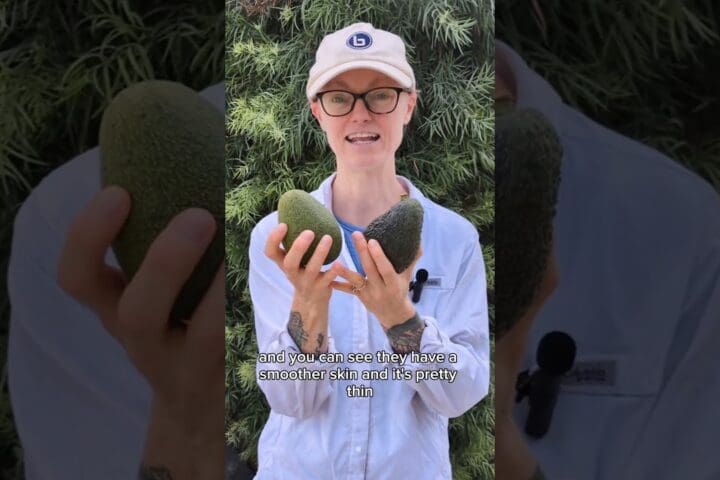
When placing a heritage Fuerte directly beside a standard Hass, the physical differences are immediate:
- Skin Texture: Hass avocados are famous for their thick, rough, heavily pebbled skin. In contrast, the Fuerte features a thin, supple, and noticeably smooth rind.
- Ripening Color: Hass avocados undergo an enzymatic skin darkening as they mature, turning from forest green to dark purple or black on the counter. Fuerte avocados remain a vibrant, bright emerald green throughout their entire life cycle, even when fully ripe and soft to the touch.
- Peeling Characteristics: Because the Fuerte rind is thinner, it peels away cleanly from the flesh, exposing the pale green, high-oil interior without sticking to the fruit.
Harvest Timelines: Why Fuerte Is California’s True Winter Avocado
The biological calendar of an avocado tree is one of its most fascinating attributes. Both Hass and Fuerte trees flower and pollinate during the early spring months, typically between January and March depending on ambient temperatures and bee activity. What happens next highlights the diversity within the Persea americana species:
- The Hass Timeline: A Hass avocado requires 12 to 16 months hanging on the branch before it achieves the necessary oil percentage to ripen properly off the tree. In many seasons, a tree carries next year’s developing fruit alongside this year’s harvestable crop.
- The Fuerte Timeline: The Fuerte moves on an accelerated schedule. Pollinated in February or March, the fruit sizes up through the summer and reaches prime maturity by November. This creates a true late-fall and winter harvesting window that bridges the gap before spring commercial picking begins.
Rediscovering California’s Heritage Varieties
Before Hass took over the commercial market in the 1970s and 1980s, the Fuerte was the undisputed king of California avocado farming. Known for its rich, nutty flavor and exceptionally smooth, buttery consistency, it remains the gold standard for many generational growers and backyard orchardists across Southern California.
As small family growers, preserving these heritage trees allows us to keep agricultural biodiversity alive while giving adventurous eaters access to fruit that commercial supply chains leave behind. Exploring these alternative varieties provides a deeper connection to seasonal food production and the true rhythm of the orchard.