San Diego Avocado History: Why Escondido Needs Avocado Trees on City Property
Escondido has no avocado trees on city property, even though, as we found in our research, the first avocado tree in San Diego County was planted here, and the city put the avocado on its official seal. We want to change that by planting heritage avocado trees in a city park, with signs that tell the story.
San Diego avocado history runs deep. For decades commercial groves have shaped the county’s economy, culture and identity. Yet in the town where it started, the trees that built that heritage are missing from public spaces.
How big is San Diego County in California avocados?
It is the biggest. In the 2001–02 season, San Diego County had 22,862 acres of Hass, the most of any county, and produced about 170 million pounds of Hass, according to Avocado Production in California: A Cultural Handbook for Growers, Book One. Hass here is picked from January through August.
Escondido shows up in the industry’s history, too. The Thomas rootstock, a variety the handbook rates highest for survival and growth when replanting in root-rot soil, originated in Escondido. And it was Tom Markle, an Escondido grower, who discovered that the Gwen variety needs a pollinizer tree nearby to set a good crop.
Read nextSan Diego Avocado Groves: Comparing 1978 to 2026 and Why We Are Replanting
The roots of avocado history in Escondido
Before San Diego County became one of the country’s leading avocado regions, early plantings took root in North County. Escondido’s climate, soil and hillsides suited subtropical fruit.
Over the decades, early varieties like Fuerte laid the groundwork for an industry that supported hundreds of family farms in our valleys. Fuerte is the variety the California industry was built on, according to the handbook. Agriculture was so central to Escondido’s identity that the avocado appears on the city seal, a symbol that still stands for our heritage.
The missing trees on public land
Walk through Grape Day Park and the civic spaces around the California Center for the Arts and you will find historical plaques, historic buildings and even a small community orange grove. You will not find an avocado tree.
When we spoke with city staff, they confirmed it: Escondido has no avocado trees on city land. Decades of landscaping went to ornamental shade trees and turf instead.
That gap stands out because the avocado landscape around here is changing. Hillsides that were once covered in groves look very different today, and the number of commercial growers has fallen sharply, as we showed in why only 1,700 commercial farms remain. A tree or two on public land would be a small, lasting reminder of what this place was built on.
What would it take to grow avocados in a city park?
Avocados are not a plant-and-forget tree, and the handbook explains why. They need good drainage, because root rot is much worse in poorly drained soils and the roots begin to die after 48 hours of flooding. Hass freezes below 29 to 30°F, so a park spot should sit where cold air drains away rather than pools. Young trees need steady, light watering: the handbook’s guide is 5 to 10 gallons a week, split into two or three irrigations. A well-chosen site and a simple drip line would cover it.
Which avocado varieties would suit a park?
A few candidates stand out in the handbook. Hass is the recommended variety for new plantings and the fruit everyone knows. Fuerte is the heritage choice, the variety the California industry was built on, and its fruit handles cold better than Hass. Bacon is probably the most cold-hardy of the commercial varieties, with trees surviving about 24°F. For a spot where one tree has to stand alone, Reed produces well in backyards without a pollinizer. Pairing an A-type tree like Hass with a B-type like Fuerte would also let a park show visitors how avocado flowers take turns. Even one tree with a good sign would be a start, and visitors could watch its fruit hang for months before harvest.
Why plant heritage avocado trees in public spaces?
Keeping farm history alive takes more than museum displays and a city seal. It takes living trees that kids can see, touch and learn from. Heritage avocado trees in public parks would offer:
- Living farm education: A firsthand look at how avocado trees grow, flower and set fruit through the seasons.
- Cultural connection: A tribute to the farmworkers, founding families and independent growers who built the region’s farming.
- Community pride: Parks that match the city seal and remind residents of North County’s farming roots.
Several city officials and local nonprofit leaders have shown interest in supporting the idea. Heritage trees could go into designated park areas, with signs about pollination, water-wise irrigation and the history of local groves.
Taking community support to City Hall
Civic projects succeed when residents speak up. Nothing is decided yet, and what would help most is clear evidence that the community wants it. Showing that people value our farming heritage will help secure the approvals to plant and care for these trees on public land.
Here is how you can help: leave a comment on the video telling City Hall why preserving California’s avocado history matters to you. We will gather those comments, print them out and take them to City Hall. You do not need to live in Escondido to comment. Many of the people who watch our videos have never been here, and that is part of the point: the avocado history of this town matters well beyond the city limits. We will share what happens when we bring the comments in.
Try this: If you live in Escondido, count the avocado trees you pass on public land next time you are out. That number is the whole argument.
If you want to help preserve our local farming legacy, share your thoughts and follow our grove updates as we work to bring avocado trees back to our city parks.
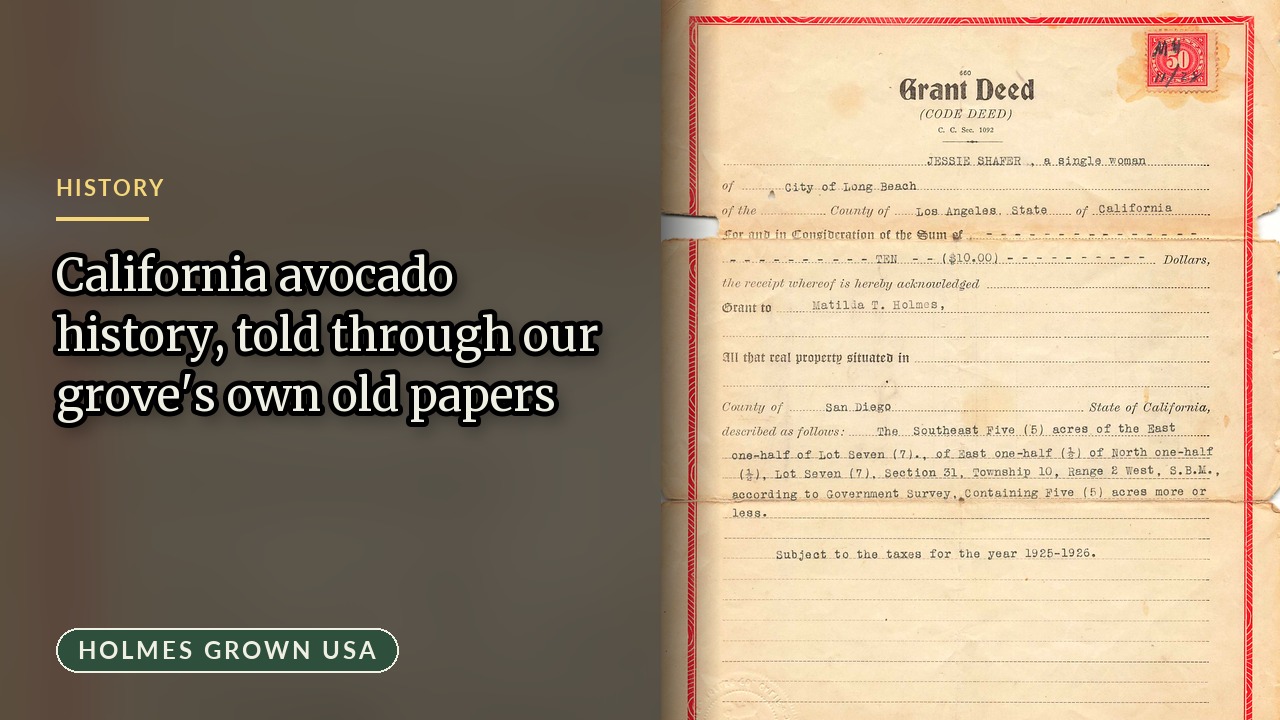
For the full story from that first Escondido tree to today, read our history of California avocados. The tree itself has its own post: the first avocado tree in San Diego County.