How Tough Is an Avocado Tree? The Fuerte Kirk Climbed as a Kid
Avocado trees are tougher than they look. The best evidence we have is a Fuerte that Kirk used to climb when he was a kid. Several years ago it fell down. It did not die. It is still growing, completely on its side, and every year it produces great Fuerte avocados.
The one thing it cannot do anymore is be climbed the way it used to.
What a fallen avocado tree does
When a tree goes over, you might expect that to be the end of it. This one kept its roots in the ground enough to stay alive, and it simply carried on from its new position. The trunk runs along the ground now, and the tree keeps leafing out and fruiting from there.
It is a good lesson for anyone looking at a damaged tree and wondering whether to pull it. Avocados can recover from a lot. We put together a whole guide to caring for fallen or hollowed-out avocado trees for exactly that reason.
Why Fuerte, of all trees?
Fuerte means “strong” in Spanish, and the name was earned. According to Avocado Production in California: A Cultural Handbook for Growers, Book One, the variety began as budwood labeled “No. 15,” collected in 1911 from a backyard tree in Atlixco, Mexico, for a nursery in Altadena. In January 1913 a hard freeze killed most of the young trees in that nursery, but No. 15 came through. Nurseryman F. O. Popenoe named it Fuerte for that hardiness, and the first Fuerte orchard was planted near Yorba Linda in 1914. The handbook describes Fuerte as the variety the California avocado industry was built on.
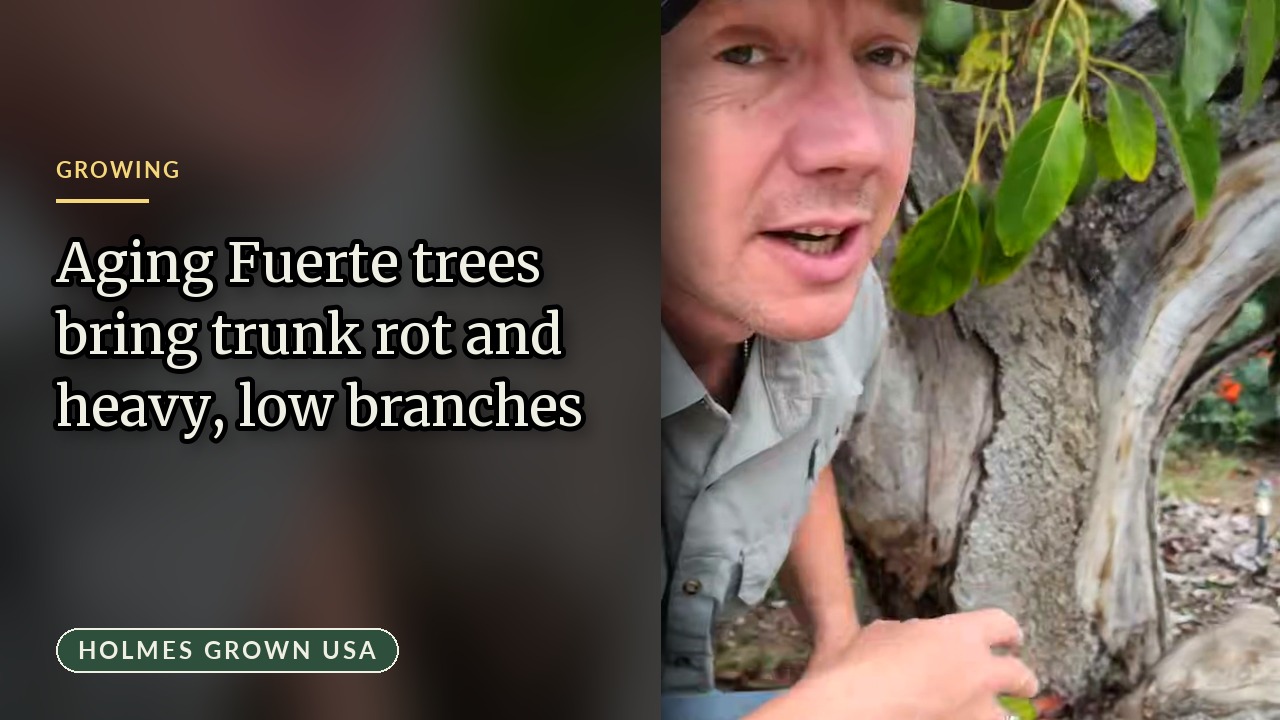
It is one of the old California varieties, and many Fuerte trees still standing today are big, aging trees with heavy limbs. We cover the realities of looking after them — trunk rot, heavy branches and all — in Fuerte avocado tree care.
What kind of tree is a Fuerte?
By the handbook’s description, Fuerte is a large, spreading tree whose leaves smell of anise when crushed, and it tolerates cold down to about 27°F, better than Hass. It does best away from the immediate coast but short of the hot interior. The fruit is green, pear-shaped and 8 to 14 ounces, and many people in the industry still consider it the best-tasting avocado there is. We would not argue.
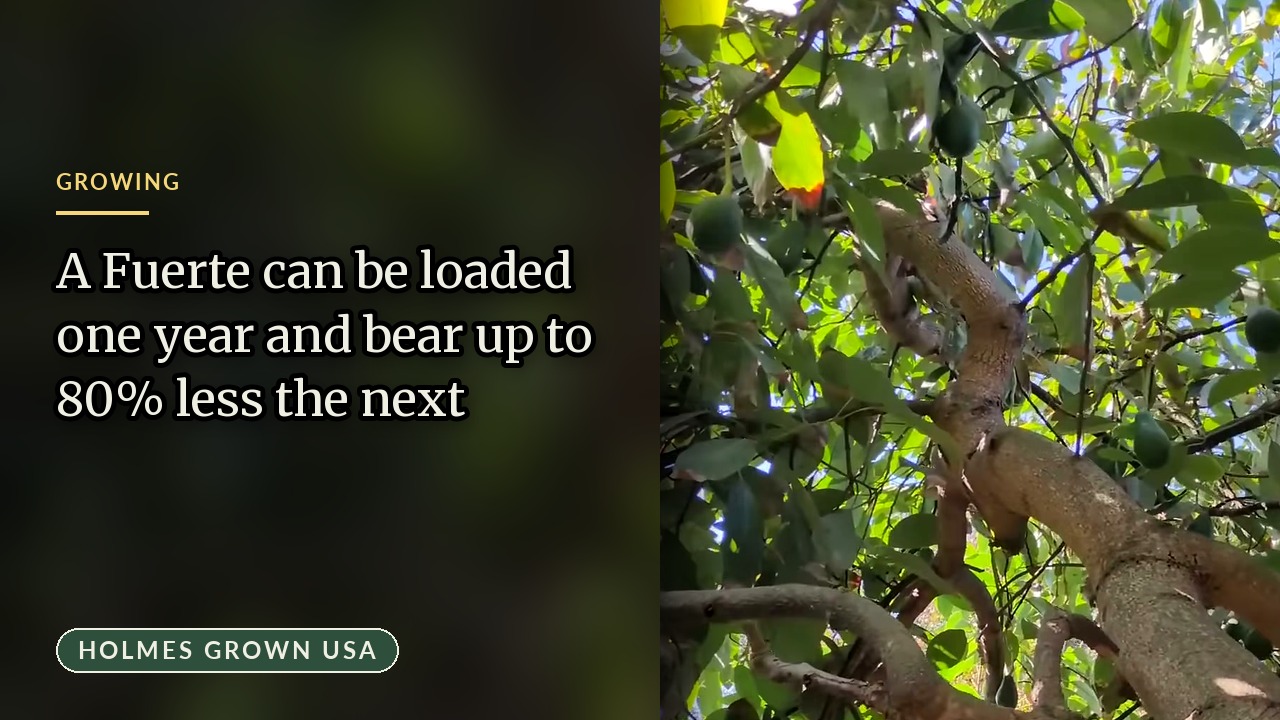
It is not an easy tree commercially, though. Fruit set is erratic, and Fuerte groves swing between heavy and light years even more than Hass groves do. That unreliability is a big part of why Hass overtook Fuerte in California volume in 1972 and went on to dominate the state’s crop. We wrote about that shift in why Fuerte lost California to Hass.
A tree with a history
Part of why we would never take this one out is personal. It was a climbing tree long before it was a sideways tree. On land that has been in the family since 1925, trees like this carry memories as well as fruit.
And it still earns its keep. If you want to taste what an old Fuerte produces, our 4lb Fuerte box ships free when the Fuerte crop is ready. Out of season, join the waitlist on the product page and we will email you when fruit is back.
Try this: Before you clear a fallen tree, look at whether it is still setting fruit. Ours does, every year, lying on its side.
This post is part of our guide to growing avocado trees.