Avocado Pest Identification: How to Spot Thrips and Persea Mite Damage
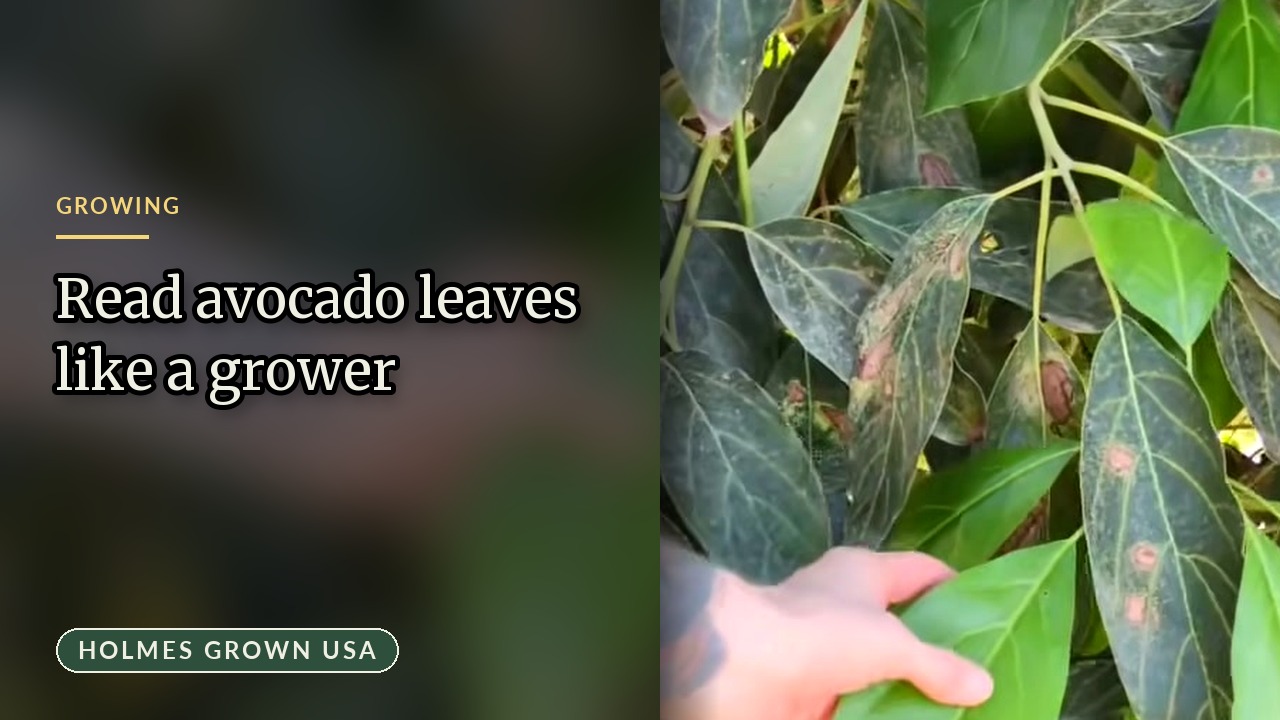
Scouting young avocado trees for early pest damage is one of the most critical habits you can build whether you manage a commercial grove or care for a single backyard tree. While inspecting nursery stock this week, we noticed sticky leaf surfaces and small brown feeding lesions directly along the leaf veins—a classic indicator of insect activity that growers must quickly diagnose.
Catching foliar damage before transplanting or early in the growing season prevents stunted flushes, defoliation, and scarred fruit down the line. Here is what we look for when distinguishing between common California avocado pests like thrips and persea mites.
Understanding Nursery Sprays and Foliar Residue
When inspecting young avocado trees from commercial nurseries, it is common to encounter sticky foliage or mild spray residues. Commercial nurseries operate under strict regulatory and phytosanitary requirements to ensure clean, disease-free trees before shipping to growers. Routine applications of horticultural oils, soaps, or targeted materials help keep high-density nursery environments free from infestations.
However, residue can sometimes mask active or past insect feeding. Taking the time to physically feel the leaf texture and check both the upper and lower surfaces helps determine whether you are looking at safe nursery protectants or active insect honeydew.
Identifying Feeding Thrips on Avocado Foliage
Avocado thrips (Scirtothrips perseae) are tiny, slender insects that thrive in mild coastal climates. While they are most famous for scarring young avocado fruitlets, they also feed heavily on tender young vegetative flushes.
- Location: Thrips typically congregate on tender young leaves and near floral structures, moving onto older leaves as growth matures.
- Damage Pattern: Feeding appears as brown, leathery scarring or stippling along the veins and margins of the leaf. Severe pressure can cause distortion or curling of new foliage.
- Impact: While mature trees can withstand foliage feeding, young saplings need healthy leaf surface area to establish strong root systems and trunk caliper.
Persea Mite Damage: Spotting the Difference
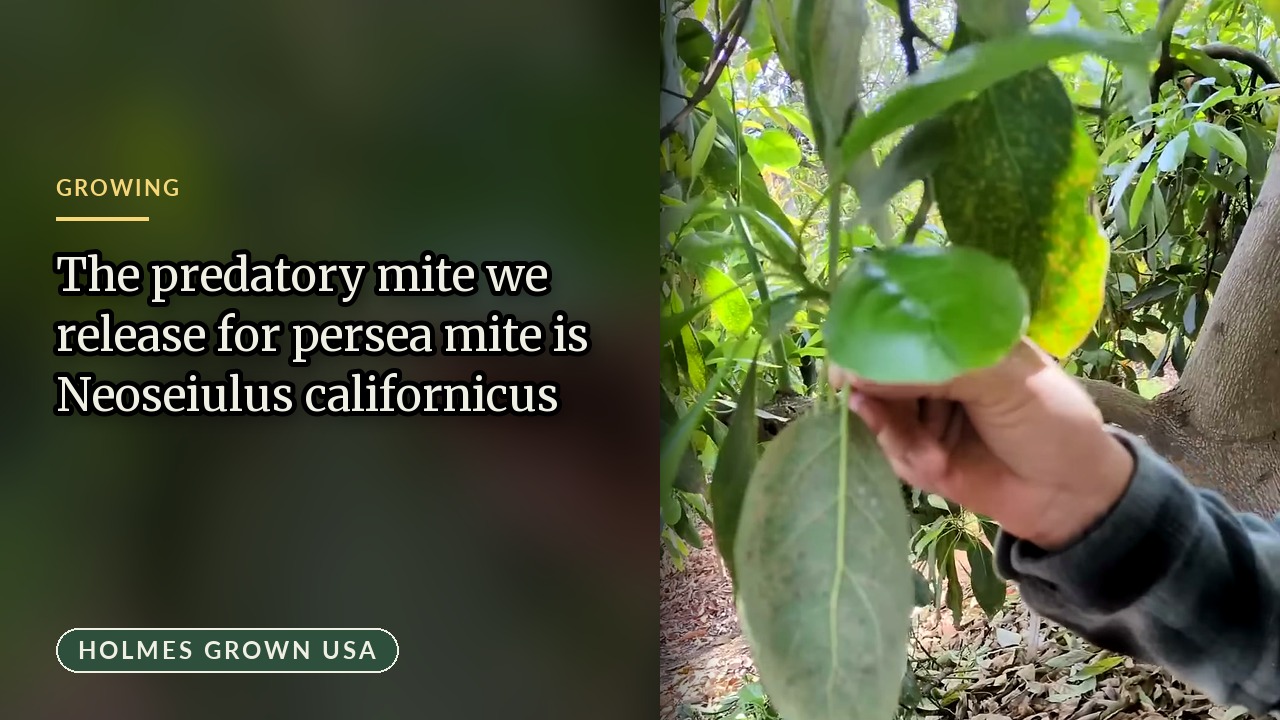
Another frequent cause of vein-focused leaf necrosis is the persea mite (Oligonychus perseae). Unlike thrips, persea mites produce distinctive physical colonies on the undersides of mature leaves.
- Webbing: Persea mites spin dense, protective silken webbing (nests) along the midrib and primary lateral leaf veins on the underside of the foliage.
- Necrotic Spots: As mite colonies feed on leaf cells, small, discrete brown or black spots develop along the leaf veins. When viewed from above, these feeding sites appear as yellow chlorotic spots that eventually turn dark brown.
- Defoliation Risk: Heavy persea mite pressure during hot, dry spells can lead to partial defoliation, exposing fruit and delicate branches to severe sunburn.
Best Practices for Inspecting Young Avocado Trees
When bringing new trees onto your property, always conduct a thorough physical check before planting:
- Inspect the Undersides: Turn older and newer leaves over to check along the central vein for tiny feeding spots, cast skins, or webbing.
- Preserve Healthy Branches: Resist the urge to aggressively prune off lower leaves or branches that show minor past damage; young trees rely on every square inch of green tissue to fuel early root growth.
- Encourage Beneficial Predators: In California orchards, predatory mites (such as Neoseiulus californicus and Euseius hibisci) play a major role in keeping both thrips and persea mite populations below economic injury thresholds.
Balancing Tree Health for Long-Term Yields
Whether dreaming about futuristic field-to-consumer drone deliveries or walking rows with a hand lens, healthy avocados start with attentive orchard care. By learning to differentiate between benign spray residue, thrips feeding, and mite colonies, you can make informed management decisions that protect your canopy without unnecessary interventions.