If You Know, You Know: Reading Avocados on the Tree Like a Grower
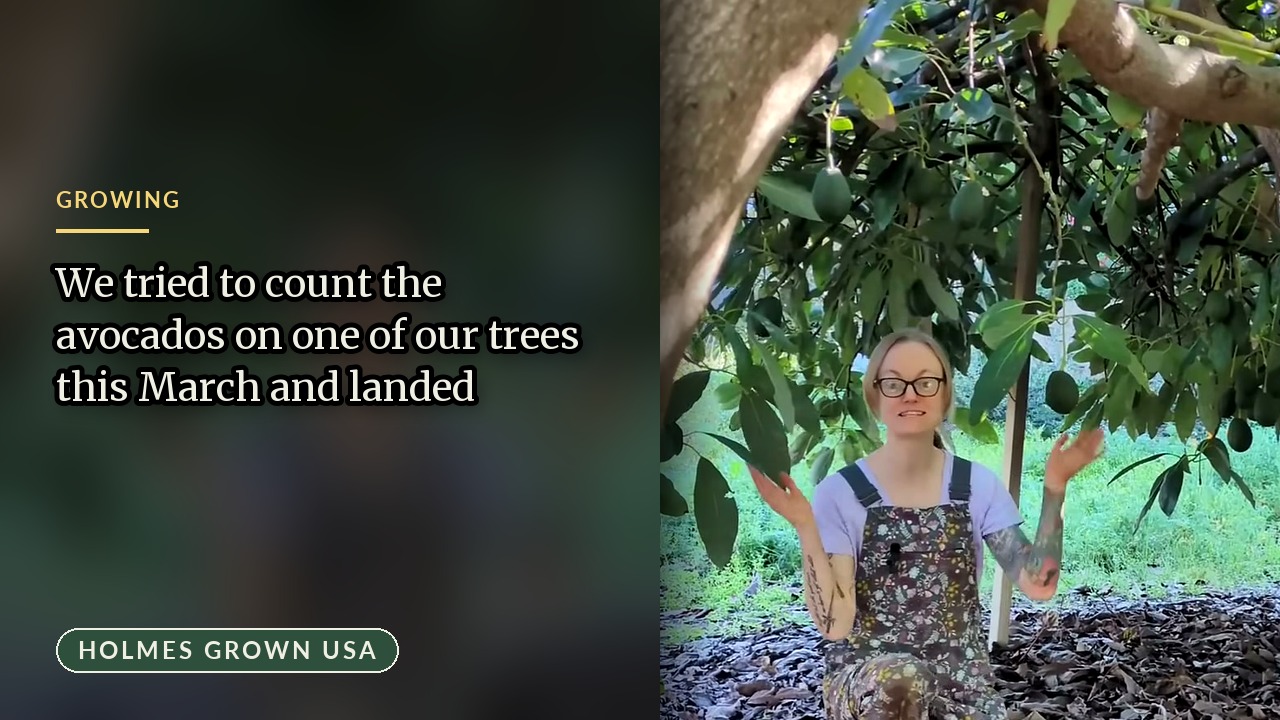
This one is a ten-second clip, and we will be upfront: it is a tease. We walk up to some avocados on one of our trees, tell you to come and look, and leave it at “if you know, you know.” If you don’t, the answer is to subscribe and keep watching.
We are not going to spoil it here either. But we can tell you what a grower’s eye goes to first when looking at fruit on the tree, because most of it can be learned, and most of it we have already written about.
What does a grower notice at a glance?
- Skin finish. Shiny skin generally means fruit that is still growing; a duller finish is one of the signs of maturity. We explain the tells in shiny vs dull avocados.
- Size and shape. A small, narrow fruit hanging among normal ones can be a cuke. The UC Cooperative Extension growers’ handbook, Avocado Production in California, describes cukes as fruit stimulated to grow by the pollen tube even though fertilization never finished, leaving them seedless. They tend to form when bloom weather is poor for fruit set, and they are sold as “cocktail” avocados. More in what an avocado cuke is.
- Sun exposure. Fruit hanging out in full sun can scorch. The handbook’s second volume describes it as a pale yellowish patch on the exposed side that can turn black, brown or red, usually worst on the south and southwest sides of the tree.
- Scars. Rough, brown “alligator skin” usually means avocado thrips fed on the fruit when it was tiny, under about three-quarters of an inch long. The handbook says the scarring is cosmetic and internal quality is not affected, and wind rubbing can leave marks that look much the same.
- How the fruit hangs. A heavy cluster on a thin limb tells you whether that branch may need support before harvest, a job we cover in staking avocado branches.
Why do growers pick by size?
Size is the first thing a picker reads. Commercial Hass is usually size-picked rather than stripped all at once: the largest fruit comes off first (size 48 and up, which the handbook puts at roughly 7.5 to 9 ounces each), then the grove gets at least one more size pick, and the season ends with a strip-pick of everything left. The handbook also recommends picking at least a third of the Hass crop before April so the tree has a good return bloom the next spring. We explain why fruit on one tree varies so much in why avocados on the same tree grow different sizes, and how we choose fruit for an order in picking a customer order by hand.
Why are there two crops on one tree?
A grower standing under a Hass in late spring or summer is often looking at two crops at once: small, bright fruit from this year’s bloom next to full-sized fruit from last year’s. Hass is mostly Guatemalan in its ancestry, and Guatemalan-type avocados take a year or more from bloom to maturity, so the old crop is still hanging when the new one sets. Telling the two apart at a glance is second nature once you have spent a season in the grove.
So what is in the video?
Watch it and decide for yourself, then tell us in the comments what you think we are pointing at. The growers among you will probably spot it straight away, and everyone else will have a better idea of what to look for next time they are standing under an avocado tree.
If you would rather skip the guessing and just eat some, our 4lb and 6lb Hass boxes ship free, picked the week they go out — and between harvests you can join the waitlist on either page.
Try this: Walk up to one of your trees and try to pick out the two different crops hanging on it. That is the first place a grower’s eye goes.
This post is part of our guide to growing avocado trees.