Why We Replanted 400 Hass Avocado Trees: Reinvesting in California Agriculture
Planting 400 Hass avocado trees on five acres is our direct answer to anyone questioning whether commercial avocado farming still has a viable future in California. For years, cultural commentary playfully blamed millennials for trading homeownership for breakfast cafes. While the meme made for easy headlines, local growers have faced far more tangible headwinds, from escalating water rates and strict labor regulations to aggressive competition from foreign imports.
Rather than pulling back or leaving fallow ground behind, we chose to double down on our commercial hillside orchard. Rebuilding a family grove requires long-term patience, substantial capital investment, and an unshakable belief in domestic agriculture.
The Decision to Replant Five Acres of Our Commercial Grove
Older California avocado orchards eventually face declining productivity. Trees outgrow efficient harvest heights, root systems encounter stress, and older spacing schemes fail to capture the efficiency necessary to survive modern utility rates. When we evaluated our lower five acres—representing half of our commercial footprint—we recognized that rejuvenation was mandatory.
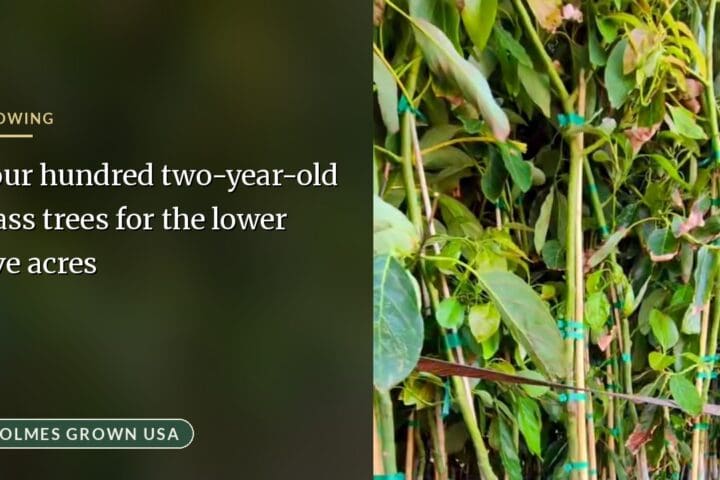
We sourced and planted 400 baby Hass avocado trees to establish a fresh canopy. Hass remains the standard for commercial domestic production because of its reliable shelf life, rich oil content, and universal consumer familiarity. By starting fresh with certified nursery stock on modern irrigation spacing, we are resetting the production clock for decades to come.
Looking Past the Millennial Avocado Myth
The cultural obsession with avocado toast obscured the underlying reality of food production. Food does not materialize in a supermarket aisle; it requires thousands of hours of manual labor, precision water management, and constant vigilance against weather shifts.
When you look past the economic jokes, the nutritional reality of the avocado is undeniable. A single whole avocado provides:
- Up to 50 percent of the daily recommended intake of dietary fiber, supporting digestive and metabolic health.
- Heart-healthy monounsaturated fatty acids that assist in nutrient absorption.
- Substantial potassium and micronutrient density without added sodium or cholesterol.
Blaming the fruit for macroeconomic housing shifts missed the point entirely. Eating high-density, nutrient-rich whole foods grown regionally by domestic farmers is something to celebrate, not apologize for.
What It Takes to Establish Young Trees in San Diego County
Getting 400 young avocado trees safely past their first few seasons requires constant field intervention. Young root systems are delicate, highly sensitive to moisture swings, and incapable of hunting for deep water.
- Dedicated Emitter Placement: Young saplings cannot survive on the broadcast sprinklers intended for mature 40-foot trees. Each tree requires low-volume micro-sprinklers positioned directly over the root zone.
- Root Zone Temperature Control: Bare Southern California decomposed granite soil can reach temperatures that cook delicate surface feeder roots. Maintaining a heavy ring of organic wood mulch keeps root temperatures moderate and conserves expensive irrigation water.
- Sunburn Protection: Because young nursery stock lacks a full, self-shading canopy, the tender green trunk tissue must be shielded with whitewash or protective tree wraps to prevent permanent sun damage during high-heat spells.
Preserving the Heritage of Southern California Groves
San Diego County has long served as the heart of American avocado history. Over the past twenty years, many historic groves across Fallbrook and Escondido have been subdivided, abandoned, or cleared due to the cost of water. Losing those trees means losing a direct connection between local communities and the land that feeds them.
Putting 400 new trees into the ground is our commitment to keeping commercial roots alive in this soil. We look forward to sharing every phase of this grove restoration as these young trees establish, mature, and eventually set their very first commercial harvest.