The Property Walk: Why We Check Our Avocado Trees Several Times a Week
We check our avocado trees several times a week because small changes are easy to see when you look often, and small problems are cheap to fix when you catch them early. We call it the property walk: we go out and check on the roughly 30 avocado trees on the just-under-an-acre grove here at the house — the trees we pick from for every order that comes in through our website.
It is not a formal inspection. It is a walk, usually with two small boys in tow, and it is one of the most useful things we do. When you see the same trees every few days, you notice when something changes.
What are we looking for?
Whatever the season calls for. When we filmed this in April, with about two months of harvest left, the list looked like this:
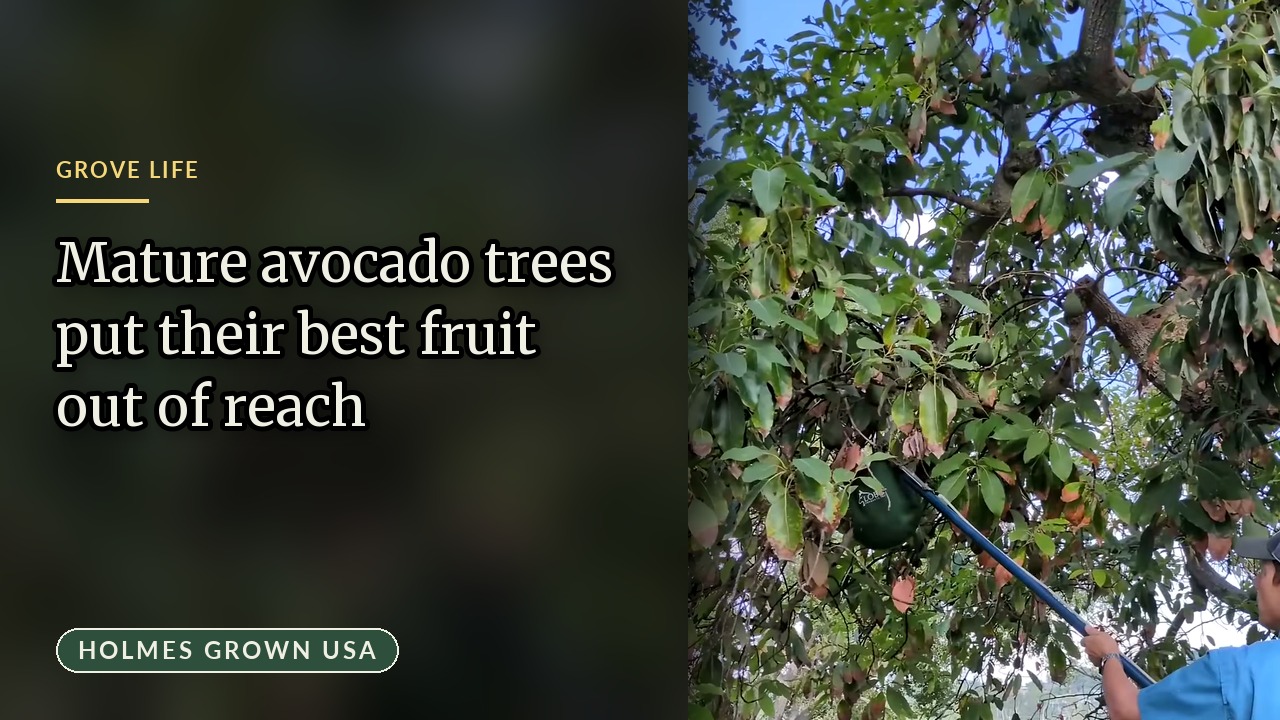
- The fruit we are selling. These trees supply the boxes, so we want to know what is on them, how it is sizing, and what is ready.
- Blossoms on the newest tree. We checked whether our young Reed was pollinating. She is.
- New growth. Fresh leaves and shoots are the clearest sign a tree is healthy, and their absence is an early warning.
New growth is worth learning to read. The color, shape and undersides of fresh leaves tell you a lot, and we put the details in our guide to avocado leaf health and new growth.
Read nextHow We Pick Avocados from the Top of the Tree
The Reed that is starting to bloom
Our newest tree is a Reed. Blossoms are one thing; fruit set is another, so we watch to see that the flowers are actually pollinating. This spring they were, which means Reed avocados next season. Reed takes its time: like other Guatemalan-type avocados, its fruit can take well over a year from bloom to maturity, so this spring’s flowers become fruit we pick the following season. And even on a healthy tree, only a tiny share of flowers ever hold on to become avocados — Avocado Production in California: A Cultural Handbook for Growers, Book One, puts it at less than 0.1 percent — so we will keep an eye on her through fruit drop.
Reed is a big, round, green-skinned avocado that ripens later than Hass and is rarely seen in stores. It also has a reputation for producing well in a backyard without a pollinizer tree nearby, which suits a single young tree like ours. If you have never had one, our overview of avocado varieties and how they taste explains what makes it different.
The trees we thought were dead
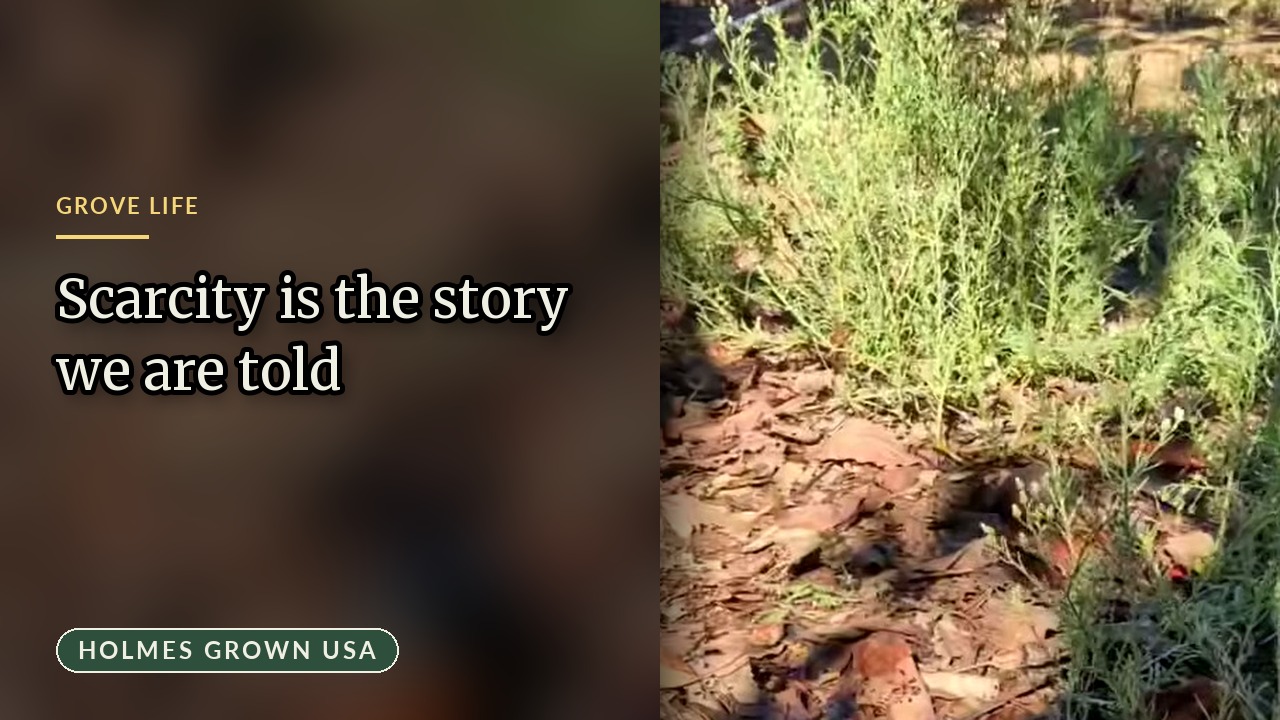
The best surprise on this walk was in the background. A few trees there looked dead last year, and we believed they had root rot. We capped them, and this year they came back with new growth.
We are not claiming a cure. Avocado Production in California: A Cultural Handbook for Growers, Book Two, is clear that root rot is managed, not cured: once it is in the soil it needs attention for the life of the trees, so new growth does not mean the disease is gone. It also warns that a thin, wilting tree with root rot does not need more water; extra water only makes it worse. What we are saying is that a tree which looks finished is not always finished, and that it is worth waiting to see before you pull it. A tree in decline usually has something going on at the roots, which we looked at in how to save a dying avocado tree.
What does trouble look like on a walk?
Most of what we watch for is in the leaves and the canopy, because that is what you can see without digging. The handbook’s list of avocado root rot symptoms is a good checklist for any walk: small, pale or yellow leaves that wilt and brown at the tips; a sparse canopy with little leaf litter underneath; branches dying back until the fruit is exposed to sunburn; and, oddly, a heavy crop of small fruit. A root-rotted tree can even look wilted while the soil under it is wet, which is exactly why we do not reach for the hose first.
Wet soil is its own warning. The handbook notes that avocado roots begin to die from lack of oxygen after about 48 hours of flooding, even without disease, and that root rot is much worse in poorly drained ground. So after a big rain or a long irrigation, part of the walk is simply looking at where the water went.
What would we miss if we only checked once a month?
Some of the most important changes happen fast. Hot spells are the clearest example: according to the handbook, temperatures over 105°F in late May or June have been known to drop almost the entire crop of young fruit that had just set, and Santa Ana winds can do the same. If we only walked once a month, we would find the fruit on the ground and never know which week did it.
Other changes are slow, and those are the ones a regular walk catches early. Leaf tip-burn from salt build-up usually shows up in September and October. Those leaves drop over winter, and the replacement flush grows in late winter and early spring, right when the tree should be flowering, so a bad tip-burn year can mean a light crop the year after. Spotting the first brown tips in early fall gives us time to look at our watering before it costs us a harvest.
Why walk so often?
Because familiarity is the whole point. We want to know what is going on with our trees, and the only way to do that is to see them regularly. Problems caught early are usually small problems.
The walk is good for us too. Getting two young boys dressed and out the door can take a minute, but once they are outside they are playing, excited and getting sun. And nobody goes back to the kitchen empty-handed.
Every avocado in our 4lb and 6lb Hass boxes comes from trees we walk past every week. They ship free during harvest, and when the season is over the waitlist on either page will tell you when picking starts again. Until the trees are picking again, the avocado scoop, the Hawaiian shirt and our hats ship year-round.
This post is part of our guide to life on our family grove.