Avocado Grove Lifestyle: Sunset Harvests and Family Farming in California
Life on a Southern California avocado grove follows the trees’ calendar: cool early mornings and sunset hours for picking, the heat of the day for irrigation and repairs, and a year shaped by spring bloom and a long Hass harvest. It is a rhythm that connects daily work with the changing beauty of the natural environment. While avocado farming requires ongoing attention to irrigation, soil health, and seasonal tree management, the personal rewards of grove life extend far beyond harvest yields.
For many small-scale agricultural operations, balancing commercial harvesting schedules with family life creates a distinct lifestyle centered on outdoor activity and sustainable living.
The Magic of Early Morning and Sunset Harvests
Timing is everything when working in an avocado canopy. Temperatures in Southern California groves can rise quickly during mid-day, making early morning hours and late afternoon sunsets the ideal times for tree inspection and selective fruit harvesting.
During dusk harvesting, temperature drops reduce stress on both the grower and the freshly picked fruit. Gathering orders right before packing ensures that the avocados maintain optimal internal quality without premature heating or pressure softening.
Building a Family Legacy on the Avocado Grove
Preserving a family avocado grove involves more than maintaining irrigation lines and pruning overgrown branches. It provides an immersive environment where children learn agricultural stewardship firsthand.
Key lifestyle benefits of family avocado farming include:
- Daily outdoor physical activity and tree climbing in mature avocado canopies.
- Direct exposure to natural food production systems and seasonal cycles.
- Hands-on learning regarding pest management, soil biology, and water conservation.
Having direct access to mature trees fosters a deep appreciation for long-term farm sustainability and food quality.
Tree-Ripened Quality and Farm-Fresh Harvests
Unlike many conventional tree fruits, avocados do not ripen on the branch; instead, they mature on the tree and soften only after being harvested. Hass fruit can hold on the tree for months after it reaches maturity, which is what lets us leave it hanging until an order comes in. There is a limit, though: the UC handbook Avocado Production in California notes that early-season Hass is not as palatable, and late-season fruit can turn rancid quickly once it softens. Picking inside that window, rather than at either extreme, is where the flavor is.
By harvesting weekly orders directly from the grove, small farm operations can deliver orchard-quality fruit that retains its peak flavor profile without extended cold storage periods.
What Does a Year on an Avocado Grove Look Like?
The grove’s year does not really start in January. It starts in late summer, when the trees finish their summer growth flush and the buds at the shoot tips switch from making leaves to making flowers, usually in August here in California. Cool weather through fall and winter is what triggers flowering; research summarized in the UC handbook Avocado Production in California found that Hass would not flower at warm temperatures at all, but did after a few months of cool days and nights.
Spring is bloom. In San Diego County the bulk of Hass flowers open over about six weeks, from late March to early May, and a single mature tree can carry up to a million flowers. Only a tiny fraction hold on to harvest, often fewer than two hundred fruit per tree. Honeybees do the pollinating, so cool, cloudy spring weather that keeps bees in the hive also means a lighter crop.
Summer is the heart of the Hass harvest, which in San Diego County can run from January through August. It is also heat season: long spells over 100°F make trees drop fruit, and a heat wave over 105°F in late May or June has been known to knock off almost the entire crop of newly set fruit. Fall brings brown leaf tips as chloride from irrigation water builds up in the leaves, usually showing in September and October, which is why growers put on a little extra water to leach salts below the roots, and in winter we keep an eye on the thermometer, because a damaging freeze comes along roughly once a decade in California.
What Makes Grove Work Hard?
Much of the work is simply getting water to trees on hillsides. Southern California averages only about 11 to 15 inches of rain a year, so irrigation runs through most of it, and many local groves sit on slopes that only became farmable once low-volume irrigation arrived in the 1970s. Avocado roots have few root hairs, which makes them inefficient at taking up water, and most of the feeder roots sit in the top 8 to 10 inches of soil. The trees use water all year, winter included. They need steady moisture, yet begin to die from lack of oxygen after about 48 hours in flooded soil. Keeping that balance is the day-to-day job, and we cover it in our guide to watering avocado trees.
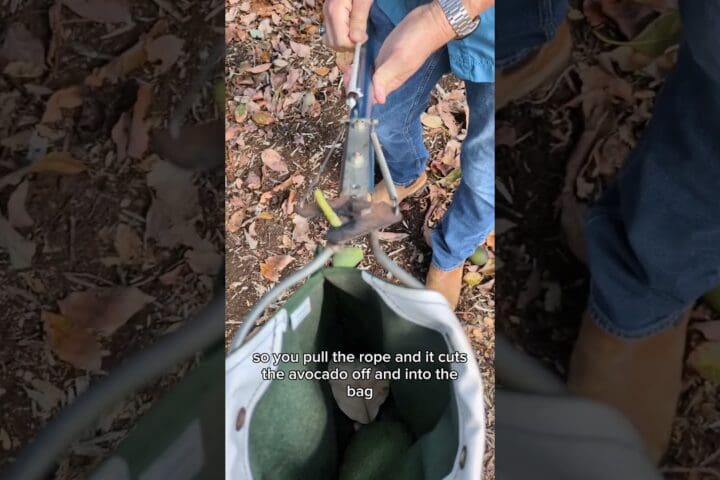
Then there is height. Left unpruned, a Hass tree can grow 50 to 60 feet tall, and big trees make picking slow and hazardous. Keeping canopies at a workable size is a steady part of the calendar, which we explain in how tall avocado trees grow. The fruit that still ends up high gets brought down with a pole picker, as in how we pick avocados from the top of the tree.
Embracing the Grove Lifestyle
Continuing an agricultural legacy requires dedication, continuous learning, and respect for the land. Whether managing a historical grove rescue or planting new avocado varieties, the routine of sunset harvests and family involvement makes every season worthwhile.
To order fresh California avocados harvested directly from our family grove, visit our main website at HolmesGrownUSA.com.