Fall or Spring? Finding Your Avocado Planting Window by USDA Zone
Should you plant an avocado tree in the fall or the spring? Both can work. October is often recommended in California, and it is what we mention in the video, but the University of California growers’ handbook puts spring first: avocados can go in any time frost is not a threat, and March or April is best, because the roots usually flush in May. If you live somewhere else, your USDA hardiness zone is the quickest way to narrow it down.
Here in San Diego we can plant almost year-round, so the date matters less for us than it might for you. What sets the window anywhere is a young tree’s two big enemies: frost and scorching sun.
Why timing matters for a young avocado
A newly planted avocado has a small root system and very little ability to cope with extremes. It is caught between two risks.
- Frost. Young avocado trees are tender, and a hard cold snap can damage or kill one that has not settled in. You want it planted early enough to be established before the coldest nights arrive. The UC handbook also advises against mulching frost-prone young trees in winter, so the sun can warm the soil around them during the day.
- Sun scorch. Plant during the hottest part of the year and a tree with barely any roots is trying to keep its leaves supplied through the worst of the heat. Newly planted trees and exposed bark can burn. The handbook suggests a thermal trunk wrap from a farm-supply store for the first year to prevent summer sunburn, removed after that year. The second UC handbook also recommends whitewashing young trees routinely at planting; white interior latex paint diluted 50% with water works.
That is the case for October. The worst of the summer heat has passed, the soil is still warm, and the tree gets time to put out roots before winter, and a long run-up before the following summer. Where winter frost is a real risk, though, a fall planting has to get through its first cold season young. If frost does burn a young tree, resist the urge to cut it back straight away. The handbook’s advice after a freeze is to wait at least six months, until regrowth shows what is really dead, to water only when the soil needs it because a leafless tree uses less, and to hold off on fertilizer until the damage is known.
What about spring?
Spring is the window the UC handbook for California growers prefers. Plant in March or April, once the frost risk is behind you, and the tree is settled in the ground when the roots usually flush in May. The trade-off is a shorter runway before summer, so a spring-planted tree needs attentive watering through its first hot months. The handbook’s rule of thumb for young trees is 5 to 10 gallons a week split into two or three waterings, never letting the root ball dry out, and a tree planted in summer may need water every two to three days — without over-watering. Our avocado irrigation calculator can help you work out how long to run the water.
Not in California? Check your zone
If you are growing somewhere else, look up your zip code on the USDA’s plant hardiness zone map. Your zone is based on how cold your winters get, which is the single biggest question for an avocado, and it gives you a good starting point for when to plant in your area. Local nurseries and extension offices can fill in the rest.
A few things matter more than the date
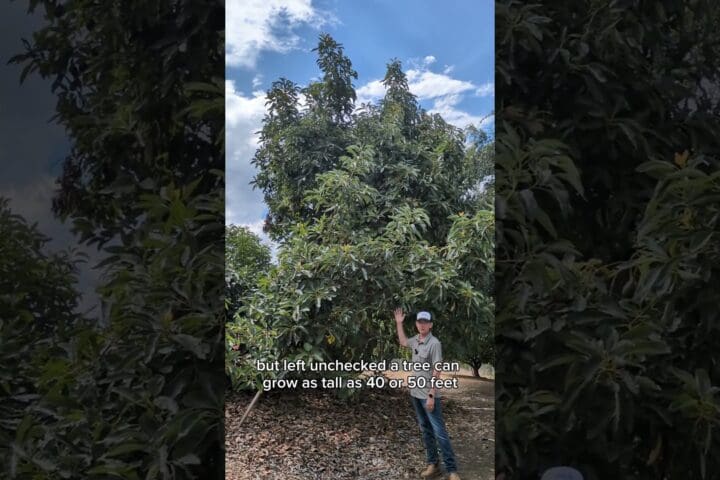
Timing gives a tree a good start, but it is not everything. Drainage is essential: avocados hate sitting in wet soil. The handbook’s simple test is to dig a hole about 18 inches deep and fill it with water; if water is still standing the next day, the spot is not good for avocados. Roots start to die from lack of oxygen after about 48 hours of flooding. Give the tree room, too. It will get bigger than you think — see how tall avocado trees grow — and keep the ground under it clear — weeds compete with a young tree for water and can harbour pests such as persea mites — for reasons we cover in why you should not grow plants under the canopy.
Then comes the waiting. A grafted tree takes a few years to bear a real crop; we covered the timeline in how long until an avocado tree produces fruit.
Have other avocado questions? Leave them in the video comments. And while your new tree gets going, our 4lb and 6lb Hass boxes can fill the gap — they ship free in season, and between harvests you can join the waitlist on either page.
This post is part of our guide to growing avocado trees.