How Long Until an Avocado Tree Produces Fruit?
A grafted avocado tree usually sets its first fruit in the third year after planting, but on our grove a real crop takes somewhere between five and seven years, and full production comes around years eight to ten. A tree grown from a pit can take ten years or more, and may never bear good fruit.
It is the question we get from anyone who has just put a tree in the ground, and it is usually asked with a slightly anxious edge: how long before this thing actually gives me avocados? Not a handful of fruit — a crop. Here is what those years actually look like, because the difference between a young tree and a mature one is larger than most people expect.
What a five-year-old tree looks like
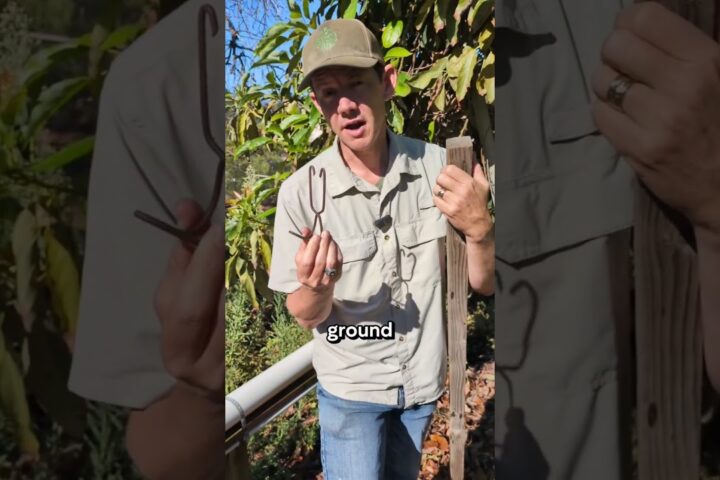
We have a tree on the grove that went into the ground as a two to three year old sapling and is now around five. It is healthy, it is growing well, and it is just beginning its journey. It is not a producer yet.
That is normal, and it is worth saying plainly, because a lot of people conclude they have done something wrong at year three. You have not. The tree is building the frame it will carry fruit on.
What a mature tree looks like
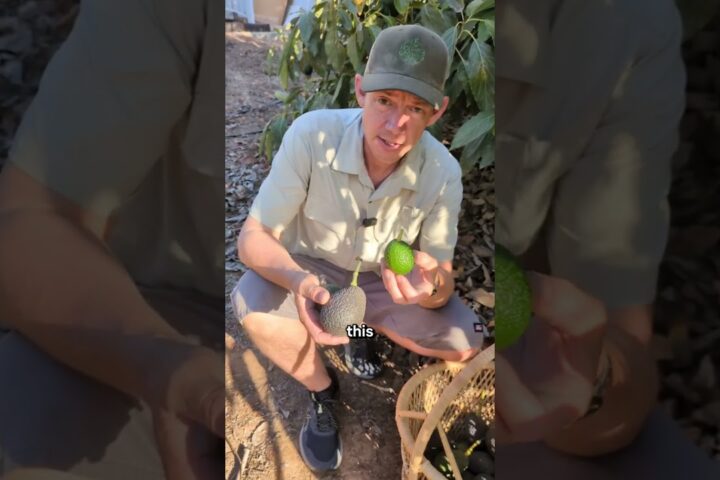
Then you look at a tree that is ten to fifteen years old and the difference is not subtle. It is significantly taller, and the crop is dense and set high in the canopy — enough fruit that getting it down becomes its own problem. We wrote about the pole picker we use to reach it, which tells you something about the scale.
That is the payoff for the patience. Full maturity does not just mean some fruit, it means a large difference in what the tree carries year to year.
Grafted, or grown from a pit?
This is the single biggest variable, and it is where most disappointment comes from.
- A certified grafted nursery tree is a known variety joined to an established rootstock. It behaves predictably, and it is what the five-to-seven year expectation is based on.
- A tree grown from a supermarket pit is a genetic lottery. It takes considerably longer — the UC growers’ handbook says up to 10 years to bear, and 10 to 15 years before some seedlings even flower — and some never bear at all. Every seedling is genetically new, and the handbook is blunt that the vast majority are inferior to the parent. Hass itself was a lucky exception. It is a lovely thing to grow on a windowsill. It is not a reliable way to get avocados.
Planting density matters too, though not in the way people expect. Closer spacing actually gives more fruit per acre in the early years; the trouble starts later, when canopies meet and crowded trees end up fruiting only in their tops. If you are planting several trees, give each one room for the size it will reach.
Which avocado varieties fruit fastest?
Variety makes a real difference. In the UC cultivar table, Hass typically takes two to three years to start bearing, Reed about two, Pinkerton and Lamb Hass one to two, and Gwen and Bacon as little as one. Gwen and Lamb Hass often flower in their second year. Those are first-fruit numbers, not full crops, but if speed matters to you, it is worth looking beyond Hass. Our guide to avocado varieties compares them.
Why is my avocado tree flowering but not fruiting?
This is the other common worry, and it is usually not your fault. A mature avocado can carry up to a million flowers a year, and fewer than one in a thousand becomes fruit that holds to maturity. By the UC handbook’s arithmetic, a good 100-pound crop of about 200 fruit comes from roughly one flower in 5,000. Weather decides a lot of it. Below about 60°F there may be no fruit set at all, and heat spells over 105°F in late May or June have been known to drop almost an entire crop of newly set fruit. A single backyard tree does not need a second variety to pollinate it; in cool spring weather its female and male flower stages overlap enough to set fruit on its own.
Once trees do start bearing, expect some years to be bigger than others. A heavy crop uses up the shoots that would have flowered the following spring, so a big year is often followed by a light one. That is alternate bearing, and even mature commercial groves live with it.
What the tree needs in the meantime
Consistent care across those years is what decides whether you are harvesting in year five or year nine. The handbook calls over- and under-watering probably the most common reasons young trees fail; its starting point for a newly planted tree is 5 to 10 gallons a week, split into two or three waterings, never letting the root ball dry out. In Southern California that mostly means water discipline — our irrigation calculator exists because getting this wrong is the most common way a young tree stalls.
Feed young trees lightly and often rather than heavily. The handbook’s second volume, on cultural care, says young trees should be fertilized cautiously, since too much burns the roots and too little stunts growth. It suggests small doses every four to six weeks from March to October: in urea terms, about a level tablespoon a month in the first year, rising to a quarter cup every other month in the second. Manure and compost should never go into the planting hole, because of their salts and ammonia. It also recommends whitewashing young trees at planting to protect the thin bark from sunburn.
It also means leaving the ground under the canopy alone. We explained why in why you should not grow plants under an avocado tree: the feeder roots sit close to the surface and do not tolerate competition or disturbance. Weeds are part of the same problem: in young groves they compete strongly for water, and they harbour persea mites and other pests. Watch for gophers and rabbits too. The handbook says rabbit damage is almost always limited to groves under four years old, and gophers can kill a tree by chewing its roots or crown below the soil line, often before anything shows above ground.
The short version
Grafted, cared for, and given room: expect five to seven years to a real harvest, with the tree getting steadily more productive for years after that. From a pit: longer, with no guarantee of what you get.
If you would rather not wait out a decade, our 4lb and 6lb Hass boxes come off trees that have already done the waiting, picked to order and shipped free. Until the trees are picking again, the avocado scoop, the Hawaiian shirt and our hats ship year-round.
This is part of our complete guide to growing avocado trees — time to fruit, height, roots, leaf health, pruning and picking, all in one place.