How to Harvest Fruit Without Damaging Tree Branches: Proper Stem Snapping Techniques
Some harvest days are about efficiency. This one was about fun, and about the snapping.
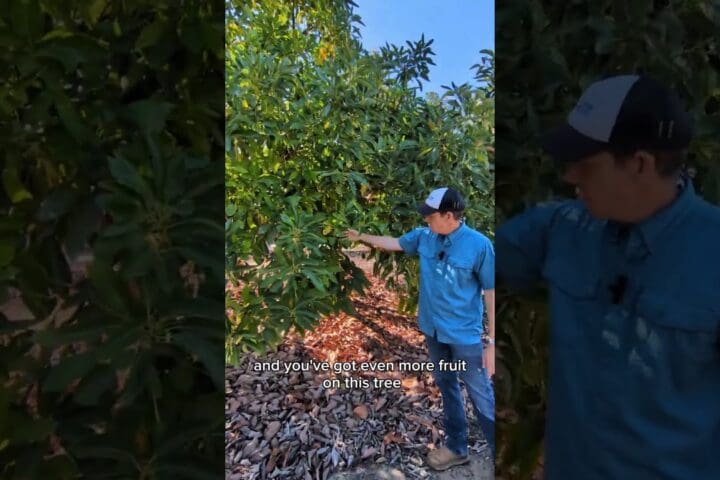
The short version of the technique: hold the fruit, bend the stem sharply where it meets the avocado until it snaps, and let the branch stay where it is. Never yank or twist a limb to free a fruit, and use a picking pole with a cutter for anything out of reach instead of pulling branches down.
We took the kids out to the grove for a picking session, and in about thirty seconds of phone footage you can see why every trip out there takes three times as long with them along, and why we wouldn’t do it any other way.
Starting at the top
Avocado trees grow tall, and the best fruit often hangs well above anyone’s reach, let alone a preschooler’s. So the picking pole comes out first. It’s a long pole with a basket and cutter on the end. Dad works it up through the canopy, finds a good one, and brings it down. From below, the boys yell out which ones they’ve spotted. They’re usually right, and they’re very loud about it. We wrote more about how we pick avocados from the top of the tree and keeping an old pole picker working.
Snapping lessons
The lower branches are where the kids come in. There’s a technique to pulling an avocado off by hand, and our oldest explained it on camera better than we could: “Just bend it in half and… snapping.” You bend the stem until it gives, and the fruit comes free. Every time it works, you get a “Whoa!” We never get tired of hearing it.
A fun fact for anyone new to avocados: they don’t ripen on the tree. The fruit can hang on the branch for months and stay firm. It only starts to soften after it’s picked. That’s why you can’t tell a ready avocado by squeezing it on the tree, and why ours ship firm and ripen on your counter.
Why careful picking protects next year’s crop
Avocado flowers form on the outer, sunlit shoots of the canopy, and the buds that become next spring’s bloom are set at the end of summer shoot growth, usually in August in California. A branch tip snapped off or stripped of leaves while someone wrestles a fruit loose can take next year’s flowers with it. It is the same reason growers are cautious about hedging and shaping trees late in the season: the handbook’s pruning chapter says not to prune after the summer flush, and in one UC trial trees pruned in October lost most of their fruiting wood. So the goal is for the stem to break, not the branch. If a fruit will not come free with a clean bend, a cutter is gentler than a harder pull.
Pick dry, and get the fruit cool
When the stem breaks matters after harvest too. The fungi behind stem end rot live on dead twigs, leaves and old fruit in the grove and get into the freshly broken stem at picking, then show up as the fruit ripens. The UC handbook’s advice is to harvest only when trees and fruit are dry, never during or soon after rain, and to get picked fruit cool quickly; for anthracnose it recommends cooling to 41°F and notes that delays of more than six hours increase decay.
When is an avocado ready to pick?
Because avocados do not soften on the tree, there is no squeeze test for picking. Growers go by season, size and maturity instead. The University of California grower handbook puts the Hass harvest in San Diego County at roughly January through August, with most picking since Chilean imports arrived focused on February through August. Early-season Hass is not as palatable, and very late fruit can turn rancid quickly once it softens, so the middle of the season is the sweet spot.
Commercial crews usually size-pick: they take the largest fruit first (size 48, about 7.5 to 9 ounces, and bigger), come back for at least one more size pick, then finish with a strip-pick of everything left. The handbook recommends taking at least a third of the Hass crop before April so the tree has a good return bloom the following spring. For reading maturity by eye, see shiny vs dull avocados, and for what happens to fruit that hits the ground, see why ground-dropped fruit can’t be sold.
The worm incident
No harvest day is complete without a detour. Down by the irrigation line, the boys found a worm in the soil and got very excited. It was so exciting that it nearly made it into the harvest basket. (“Don’t put that worm in the basket, please” might be the most-said sentence on our farm.)
Honestly, we were glad to see it. Worms mean healthy soil, and the thick layer of leaf mulch under our trees is there to keep the soil cool, moist and alive. The worm went back to work, and the avocados went in the basket.
Why we bring the kids
Taking toddlers to pick is not the fastest way to harvest. But HolmesGrown has always been a family grove, and we want our kids to know where their food comes from: that it grows on a tree, that it takes care and patience, and that picking it is its own reward. When you order a box from us, the fruit was picked by hand by a family that cares about every one of them. Sometimes that family includes a very enthusiastic four-foot-tall helper.
Get on the list for the next harvest
Our avocado boxes are sold out right now. The best way to get the next batch is to join the back-in-stock waitlist on holmesgrownusa.com. We’ll email you as soon as boxes are available again, and you’ll be first in line before they’re gone.
See you on the grove.
This is part of our complete guide to growing avocado trees — time to fruit, height, roots, leaf health, pruning and picking, all in one place.