Reviving a 50-Year-Old Avocado Grove: Replanting for the Next Generation
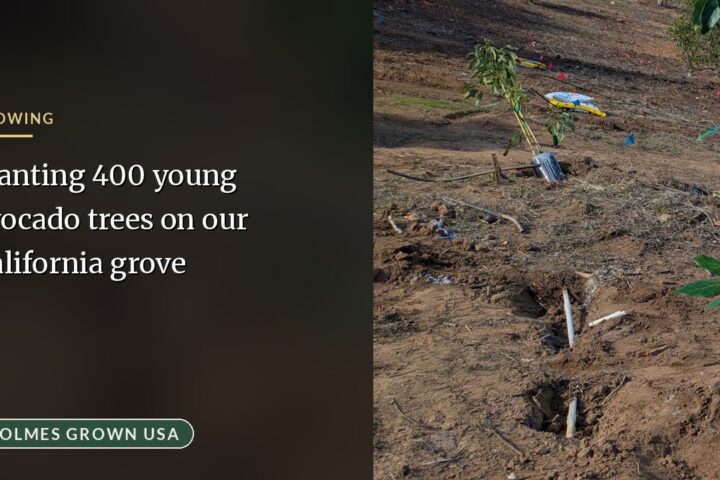
For the first time in nearly five decades, brand new avocado trees are going into the soil on our family grove. Deciding to replant an orchard block is one of the most significant long-term commitments an avocado grower can make, especially in Southern California where commercial agricultural operations face unprecedented economic headwinds. This revitalization effort represents our plan to sustain our working orchard and remain a viable part of the region’s agricultural heritage.
The State of Southern California Avocado Farming
Fifty years ago, hillside avocado orchards dominated the rolling terrain of San Diego and Riverside counties. Over the intervening decades, escalating municipal and agricultural water rates, persistent drought cycles, and international competition have reshaped the agricultural landscape. Today, only approximately 1,700 commercial avocado growers remain active in Southern California.
Maintaining a working grove under current cost pressures requires intentional resource management. Mature groves that have produced for forty to fifty years eventually encounter declining yields, canopy overcrowding, and irrigation inefficiencies. Rather than letting acreage sit idle or succumb to suburban sprawl, replanting allows small family operations to modernize their orchard design from the ground up.
Why Replanting Matters After Fifty Years
While an avocado tree can survive and yield fruit well past forty years of age, commercial viability depends on canopy health, tree spacing, and irrigation efficiency. Replanting our aging block offers several clear advantages:
- Precision Water Delivery: Modern micro-sprinkler emitters apply water precisely within the feeder root perimeter, preventing water waste and lowering total acre-foot consumption.
- Improved Canopy Architecture: Newer planting layouts allow better sunlight penetration, simpler harvest accessibility, and more efficient pruning routines.
- Enhanced Rootstock Resilience: Modern grafted rootstocks offer improved tolerance to soil-borne pathogens such as Phytophthora root rot, giving young trees an optimal foundation for long-term production.
Preparing the Hillside for New Saplings
Putting new trees into the earth requires extensive preparation well before planting day arrives. In our steep terrain, hillside soil management dictates whether a sapling thrives or suffers transplant shock.
Prior to planting, irrigation mains must be inspected, line pressures calibrated, and deep planting basins contoured into the slopes. Each planting site receives generous layers of coarse wood chip mulch to protect delicate shallow roots from harsh midday heat and to lock in vital soil moisture. Once in the ground, these young trees will receive structured nutritional amendments such as gypsum and balanced fertilizers to support vegetative growth during their establishment phase.
Looking Ahead to the Next Fifty Years
An avocado tree typically takes three to four seasons of steady care before setting its first harvestable crop. Planting today is an investment in the grove’s future output through the coming decades. Revitalizing our grove ensures that fresh, locally grown California fruit continues to thrive right here on our hillsides.
We are documenting each phase of this restoration project, from the initial earthwork to future tree training. Follow our ongoing grove updates to see the full transformation as our hillside orchard enters its next chapter.
For how San Diego’s hillside groves looked in 1978 compared with today, see San Diego Avocado Groves, 1978 vs 2026. For the numbers behind keeping a grove going, read what it really costs to run a California avocado farm.