Planting 400 Avocado Trees: Revitalizing Our Commercial California Grove
Planting 400 young avocado trees marks a historic milestone in our journey to revitalize five acres of our family commercial grove. Delivery day brings both immense excitement and serious horticultural precision, especially when navigating hot Southern California weather and dry Santa Ana winds. Here is how we prepare, inspect, and protect young nursery stock before the trees ever touch orchard dirt.
Receiving Nursery Avocado Trees in Sleeves
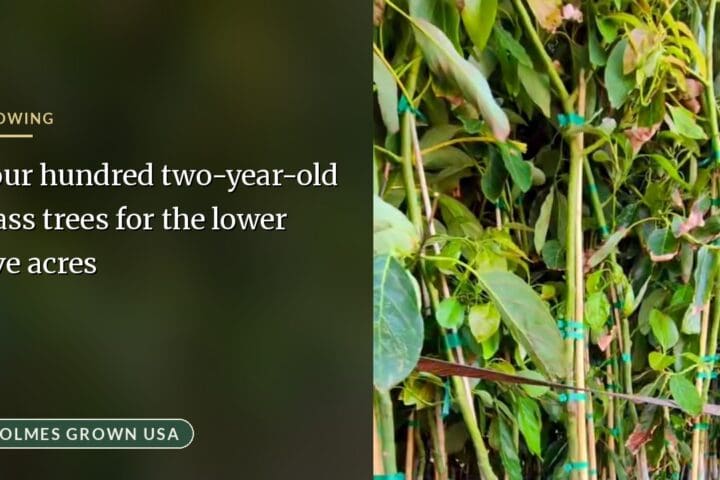
Commercial avocado trees arrive from certified agricultural nurseries packed tightly in poly planting sleeves or bags rather than rigid plastic pots. With over 300 trees packed securely into the trailer and another hundred staged beside it, our immediate priority was managing ambient temperature. Avocado root systems are remarkably shallow, sensitive, and fibrous. Leaving exposed nursery bags in direct sunlight during a heat event can heat root balls past survival thresholds within hours.
We immediately staged the incoming Hass inventory underneath established canopy shade to buffer root systems against the drying winds. Keeping root zones cool and moderately hydrated during staging ensures the trees endure minimal shock before transplanting begins.
Inspecting Rootstocks, Scions, and Graft Unions
Commercial avocado production relies on grafted trees. A vigorous, disease-resistant rootstock provides strong anchor root health below ground, while an elite scion provides the desired cultivar above ground. On young nursery trees, that graft union is visibly raised just a few inches above the soil line.
Before planting out five acres, every tree gets evaluated for:
- Graft union integrity: Checking for smooth, fully callused unions free of cracks or mechanical stress.
- Root health: Ensuring root tips visible through nursery sleeves show clean, active growth without circling or root rot symptoms.
- Foliage balance: Confirming active terminal buds without excessive dieback from nursery transit.
Why Young Avocado Trees Are Painted White
One of the most frequent questions visitors ask when looking at our nursery stock is why the foliage and tender green trunks carry a chalky white coating. That coating is protective agricultural paint, essentially sunscreen for baby trees.
Unlike mature trees with broad, self-shading foliage canopies, young avocado bark contains green chlorophyll that easily burns under intense ultraviolet exposure. Severe sunburn damages vascular cambium tissue, stunting trunk expansion and inviting fungal pathogens. Commercial nurseries paint the foliage and upper stems prior to shipment, and our crew paints lower trunks white once trees are set in the ground to protect exposed tissue until the new canopy leafs out.
Revitalizing Five Acres to Save the Family Farm
Looking across the orchard hillside, hundreds of white painted markers indicate the precise locations where these 400 trees will be installed. Revitalizing an older commercial orchard requires calculated spacing, modern micro-sprinkler layout, and soil preparation to ensure every new tree has optimal access to drainage and nutrition.
Over the coming week, as temperatures moderate, our crew will systematically plant, stake, basin, and paint every sapling across this newly prepped ground. Replanting at this scale is a generational investment in the health of domestic agriculture and the future of our family orchard.
For the first planting day and what it took to get these trees in the ground, read planting 400 Hass avocado trees on our mountain grove. To see the numbers behind a replant, start with what it really costs to run a California avocado farm, or learn the basics in how to grow avocado trees.