Snapping Off Dead Branches Before They Bruise the Fruit
One of our regular weekly jobs on the grove is walking the trees and checking for dead branches — especially a big clump of dead wood — and breaking them off. It looks like tidying up. It is really fruit protection.
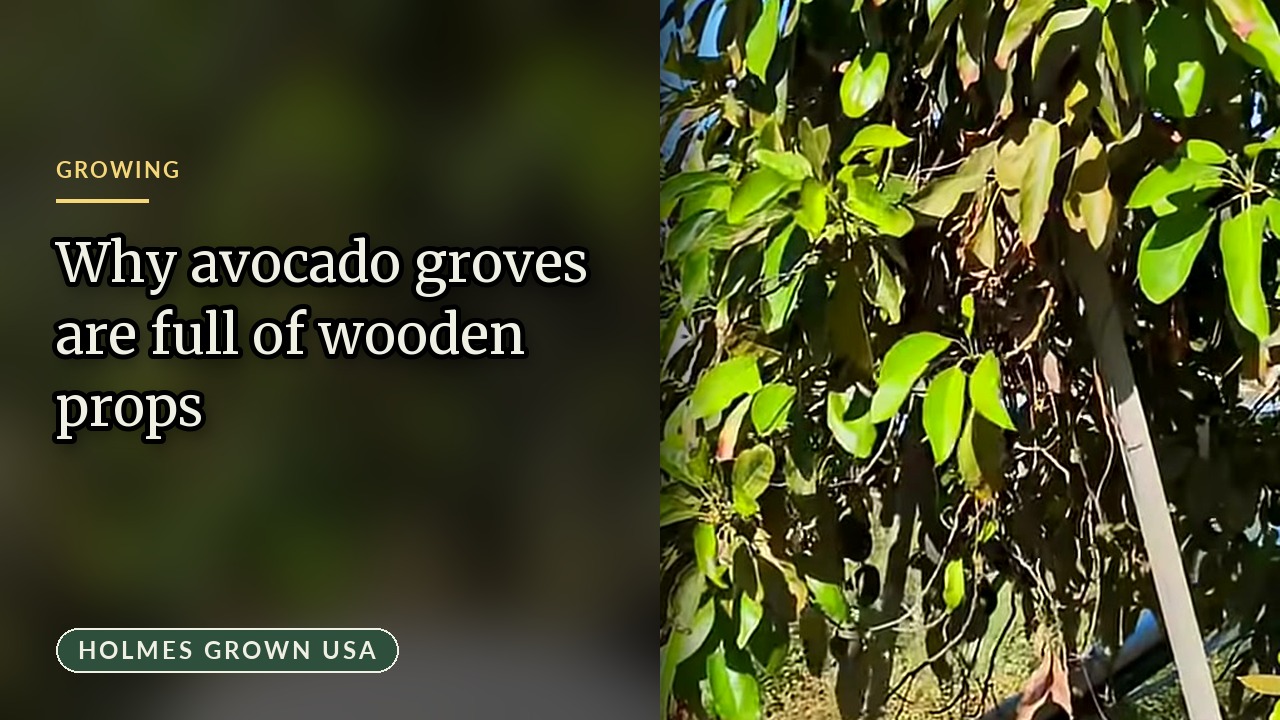
The reason is simple. In the video there is a clump of dead branches with avocados hanging right next to it. When the wind picks up, and we have had some windstorms lately, that dead wood whips around and bangs into the fruit.
What does a dead branch do to an avocado?
Two things, both bad:
- It bruises the fruit. An avocado knocked repeatedly by a stiff, dry branch gets marked and bruised, and that damage shows up when you cut it open.
- It knocks fruit off the tree. Worse than a bruise is an avocado on the ground. Fruit that falls cannot be sold — we explained the rules in why ground-dropped avocados can’t be sold — so a windstorm plus dead wood can cost real money.
Live branches bend and give in the wind. Dead ones are brittle and rigid, which is exactly what makes them dangerous to the fruit around them. Wind is hard on avocados even without dead wood: it causes leaf drop and fruit drop and raises water use, and Hass was rated low for wind tolerance in UC’s cultivar comparison.
What we look for on the weekly walk
We are not doing a full prune on these rounds. We are looking for dead wood sitting close to fruit, and anything that looks likely to swing or break in the next blow. Small, dry twigs usually snap off by hand. Anything larger gets a proper cut with pruners so we do not tear bark on the living part of the tree.
Clearing dead wood also opens the canopy a little, but we are careful not to overdo it. Avocado bark and fruit sunburn easily, and too much opening up can trade one problem for another. The handbook’s answer for limbs suddenly exposed to full sun by heavy pruning is a coat of whitewash or white water-based paint. We wrote about that balance in avocado sunburn and pruning water sprouts.
Dead wood is also where fruit rot starts
There is a second reason to get dead wood out of the canopy, and it has nothing to do with wind. According to the UC growers’ handbook, dead twigs, dead leaves and old mummified fruit left in the tree are where the fungus behind anthracnose builds up its spores. Rain and sprinkler splash carry those spores onto the fruit, where they sit quietly until after harvest and then show up as black, sunken spots as the avocado ripens. Dead branches also carry the spore-producing structures of Dothiorella, which causes bark cankers and another post-harvest fruit rot.
The handbook’s advice lines up with these walks, with a few extra rules:
- Get dead wood and old fruit out of the tree, ideally before bloom.
- Prune only when the trees are dry. Dothiorella gets in through wounds, and wet weather spreads the spores.
- Keep the skirt up, with the lowest limbs at least two feet off the ground.
- Clean tools between trees, because pruning cuts can carry disease from one tree to the next.
Why weekly, and not once a year?
Old trees like ours shed dead wood all the time, and windstorms do not wait for a pruning schedule. A few minutes per tree each week catches problems while there is still fruit to save. After a big storm we do a more thorough check, as we described in storm aftermath in the grove.
Heavy fruiting branches that are sagging are a separate issue — for those, see how we stake avocado branches.
A little weekly care is a big part of why the fruit arrives in good shape. Our 4lb and 6lb Hass boxes ship free, picked the week they go out — and between harvests you can join the waitlist on either page and we will email you when fruit is back. Until the trees are picking again, the avocado scoop, the Hawaiian shirt and our hats ship year-round.
Try this: Walk your trees after a windstorm and look for dead wood sitting right beside hanging fruit. That combination is what costs you avocados.
This post is part of our guide to growing avocado trees.