Replanting an Avocado Grove: Planting Our First New Tree in 50 Years
Planting avocado trees on a steep California hillside is more than routine orchard maintenance for us—it marks the first time in fifty years that a brand-new tree has been planted on our family grove. Five decades after the original orchard was established, we are putting shovel to dirt to launch a complete restoration of our hillside land.
The Fifty-Year Milestone on Our Escondido Hillside
When my husband’s parents originally cleared this ground and planted avocado trees, the agricultural landscape across Southern California looked entirely different. Water was abundant, family farms dotted every slope, and the region stood as the unquestioned avocado capital of the nation. Over the passing decades, however, orchards age. Severe drought cycles, escalating utility costs, and natural tree senescence gradually reduced the grove’s canopy.
Placing this young sapling into the soil represents an intentional decision: we refuse to let this agricultural heritage disappear. While managing mature trees requires ongoing canopy pruning and moisture management, establishing young stock requires rebuilding the entire orchard infrastructure from the ground up.
Read nextFirst Avocado Tree in San Diego County: The Surprising History of Escondido Avocados
Why Replanting an Aging Orchard Is Essential
Commercial avocado trees can remain productive for decades, but productivity eventually declines as trees reach the half-century mark. Replacing unproductive acreage with certified nursery stock allows growers to introduce modern improvements:
- Resilient Rootstocks: Modern rootstock selections offer superior tolerance to root rot pathogens and salinity compared to rootstocks common decades ago.
- Optimized Tree Spacing: Re-evaluating tree density on slopes allows for better sunlight interception and more manageable harvesting down the line.
- Resource Efficiency: Young trees integrated into targeted drip micro-sprinklers use water far more efficiently than older, uncalibrated irrigation lines.
Hillside Soil Prep and Irrigation Infrastructure
Planting on a hillside requires careful soil and moisture management. Unlike flat farmland, slopes demand strict erosion control and thoughtful water delivery. Before this first tree could enter the soil, we had to run new poly irrigation tubing, dig out terraces that capture runoff without pooling, and inspect soil structure to ensure rapid drainage. Avocado roots are shallow and extremely sensitive to waterlogged dirt, meaning proper hillside drainage is one of our greatest natural assets.
Each newly dug hole is prepped carefully to protect the fragile root ball. Once planted, the sapling is firmly secured to a sturdy wooden support stake to protect tender stems against seasonal winds until root anchor systems fully develop.
What Comes Next for the Young Sapling
Getting the tree in the ground is only the opening move. Over the coming months, our primary focus shifts toward early canopy establishment and environmental protection:
- Sunburn Prevention: Young green trunks are vulnerable to thermal injury from intense midday heat, requiring whitewash or tree wraps until leaf canopies expand.
- Targeted Irrigation Schedules: Delivering frequent, modest water pulses to match shallow young root zones without saturating surrounding ground.
- Weed and Competition Control: Keeping the root footprint clear of heavy feeders and weeds ensures all applied nutrients reach the growing sapling.
Preserving California Agriculture for the Next Generation
Farming in California presents undeniable challenges, from imported fruit competition to steep operational expenses. But restoring this grove tree by tree is our commitment to producing nutrient-dense, locally grown whole food right here at home. This single sapling is the first of many as we document the renewal of our family orchard.
To learn more about our grove restoration strategies and hillside irrigation management, explore our complete archive of field notes and orchard maintenance guides.
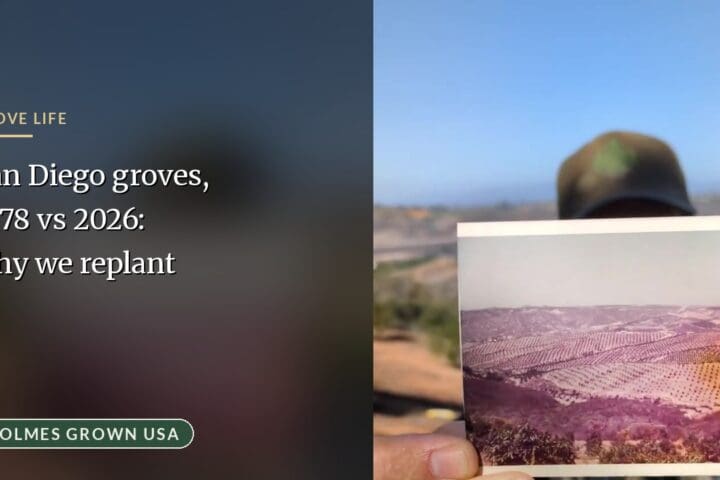
Read more about the replant in reviving a 50-year-old avocado grove and see how the land has changed in San Diego avocado groves, 1978 vs 2026. For the bigger story, visit our history of California avocados.