How to Identify Weeds and Invasive Vines in Your Avocado Tree Canopy
To tell a climbing weed from real avocado growth, follow the suspect stem down to the ground: avocado shoots always trace back to an avocado limb, while a vine roots in the soil and winds up through the canopy. Then check the leaves, because avocado leaves are broad and leathery with gentle, widely spaced veins, and an imposter usually has tight, narrow veins clustered close together.
It is surprisingly easy to mistake an aggressive climber for new canopy growth, especially once it reaches the sunlit top of the tree. Below we cover what gave one away in our own orchard, why vines and weeds under the canopy cost you water, nitrogen and fruit, and how we remove them without hurting the tree.
The Imposter Leaf: Spotting the Subtle Differences
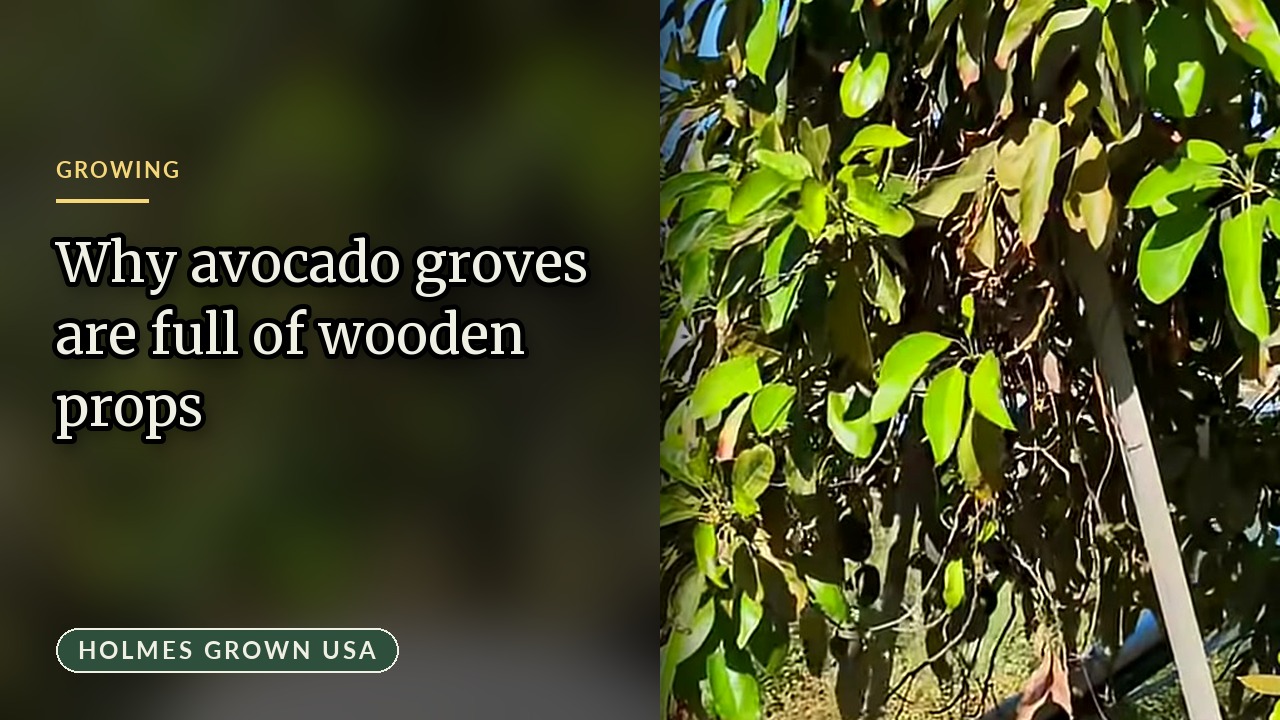
During a routine walk through our Escondido orchard, a patch of green caught our eye because the leaf veins were tight, narrow, and clustered close together. Genuine California avocado leaves, such as those on a Hass or Fuerte tree, feature broad, gentle venation and a distinct leathery texture. When we asked our cameraman to follow that suspect stem all the way back down to the ground, sure enough, it had rooted in the soil below and wound its way straight up through the tree canopy.
Climbing vines and opportunist weeds frequently disguise themselves by running parallel to existing avocado limbs. By the time they reach open sunlight at the top of the canopy, their leaves blend in so naturally that many growers fail to notice them until they begin to smother productive fruiting wood.
A quick checklist we use on our walks:
- Trace the stem. If it disappears into the soil or the mulch instead of joining a branch, it is not avocado.
- Look at the veins. Avocado leaves have a clear central vein with side veins spaced well apart. Crowded, fine veining is a warning sign.
- Feel the leaf. Mature avocado leaves are stiff and leathery. Thin, soft leaves among the branches deserve a second look.
- Watch for twining. Avocado wood does not wrap around anything. A stem that spirals around a limb is a climber.
Read nextHow to Stake Avocado Tree Branches: Protecting Fruit and Guiding Canopy Growth
Why Invasive Climbers Harm Avocado Trees
Allowing foreign vegetation to establish itself inside an avocado canopy creates several direct hazards for the tree:
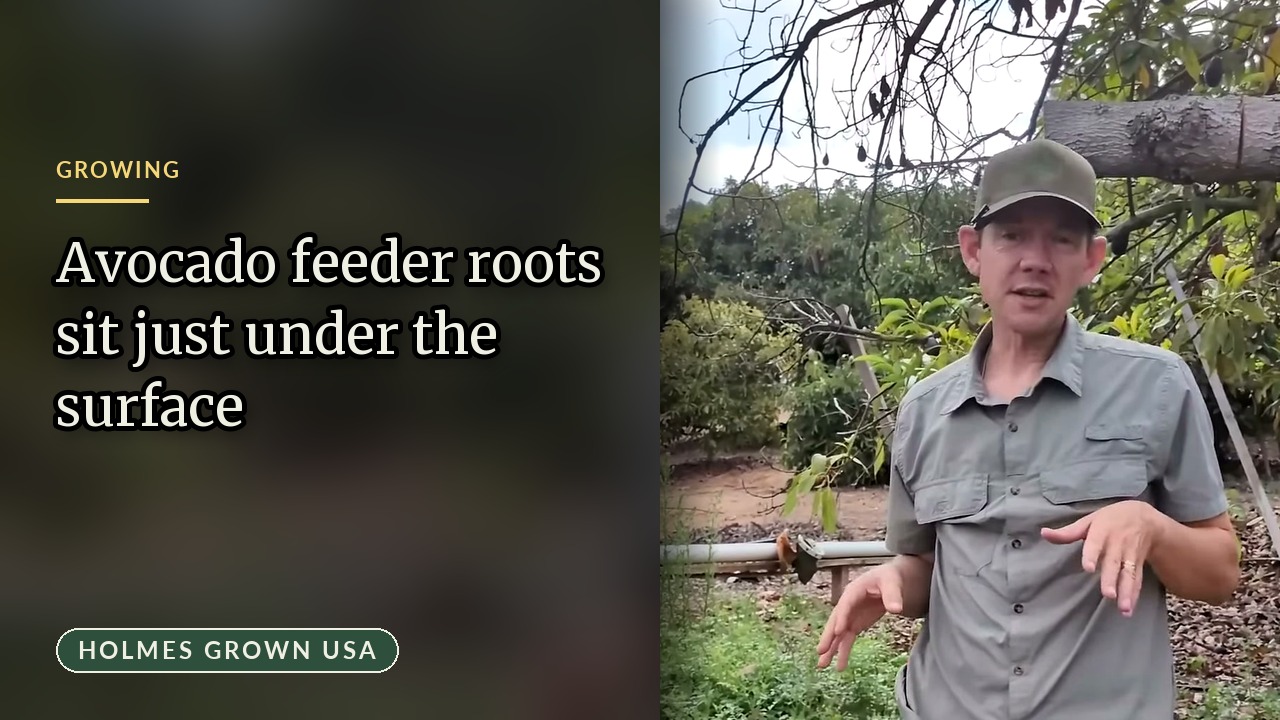
- Nutrient and Water Robbery: Avocado roots are shallow. According to Avocado Production in California: A Cultural Handbook for Growers, Book Two, 80 to 90 percent of the feeder root length sits in the upper 8 to 10 inches of soil, and those feeder roots have very few root hairs, so they absorb water poorly. Weeds and vines rooting in the drip line take water and fertilizer from exactly the layer the tree depends on.
- Light Blockage: The handbook notes that Hass flowers on the sunlit outside of the canopy. A vine that spreads across the top of the tree shades the very wood that should be setting next season’s fruit.
- Moisture Trapping and Disease: When heavy vines press tightly against avocado bark, they trap humidity and debris. That damp microclimate encourages bark cankers, fungal pathogens, and insect harborage.
Do Weeds Under an Avocado Tree Really Hurt It?
Yes, and more than many backyard growers expect. Book Two of the handbook says weeds compete strongly for water in young, stumped or top-worked groves, and that weeds and cover crops also compete for nitrogen, which is why growers knock them back before fertilizing. Because the avocado’s feeder roots are so close to the surface, there is no deeper soil layer the tree can fall back on while weeds drink from the top.
Weeds also give pests a place to live. On our grove we treat weed growth as a pest problem as well as a water problem, because weeds harbor persea mites and other pests that move up into the trees. Clearing the ground under the canopy takes away that bridge.
Can You Spray Weeds Under Avocado Trees?
For young trees, the answer from Avocado Production in California: A Cultural Handbook for Growers, Book One is no: control weeds with mulch and hand weeding, and use no herbicides in the first year. We follow the same approach under our backyard trees, because the shallow feeder roots and thin young bark are easy to injure.
Mulch does most of the work. The handbook recommends at least 4 to 6 inches of coarse organic mulch, kept several inches away from the trunk, and it notes that ground wood works better than natural leaf drop alone. Keeping the mulch off the trunk matters because Phytophthora canker enters the tree through wounds, so the handbook advises against stacking wood against trunks and suggests raking mulch back to keep the lower trunk dry. One caution: high-carbon wood mulch can tie up nitrogen for a while, so a freshly mulched young tree may need a little extra nitrogen.
How to Safely Remove Vines from an Avocado Canopy
When you discover an invasive vine climbing through your avocado branches, careful removal prevents accidental damage to the tree:
- Sever the Stem at the Base: Locate where the weed or vine enters the ground and cut the main stem clean through with sanitized pruning shears. Do not aggressively yank the vine out of the upper canopy while it is green, as you risk stripping young avocado shoots and knocking off immature fruit.
- Let the Foliage Wither: Within a week or two, the severed vine will brown, soften, and lose its grip on the bark, allowing you to gently pull it down without ripping avocado limbs.
- Dig Out the Root Carefully: Loosen the soil around the vine base by hand and lift out its roots, working slowly so you do not tear the avocado feeder roots that fill the top few inches of soil. Avoid nicking the trunk with tools, since wounds are an entry point for canker.
- Re-mulch the Drip Line: Spread a thick layer of coarse wood chips across the root zone to suppress the next flush of weed seedlings and hold soil moisture, pulling it back a few inches from the trunk.
Protecting Grove Health Season by Season
Keeping a family avocado grove thriving requires persistent attention to the small details that make or break tree vigor. Inspecting your foliage, understanding leaf characteristics, and eliminating invasive climbers early ensures that the water and nutrients you give the tree go into healthy canopy and a good crop. We pick our avocados mature but hard and let them soften off the tree, and a clean, well-mulched root zone is a big part of getting the tree to that point every year.
If you want to go further, our post on why you should not grow plants under the avocado canopy covers what to keep out of the root zone, and our complete guide on how to grow avocado trees walks through planting, watering, mulching and care from start to harvest.