A Loaded Tree Is Not a Forecast: Why We Won’t Guess Next Year’s Avocado Crop
How many avocados will we have next year? We do not know. This tree is completely loaded with baby avocados of all different sizes, and it would be easy to look at it and start counting money. But a tree full of little fruit in spring is a promise, not a harvest, and plenty can change between now and picking time.
Look down instead of up and the ground tells a different story.
What is on the tree right now
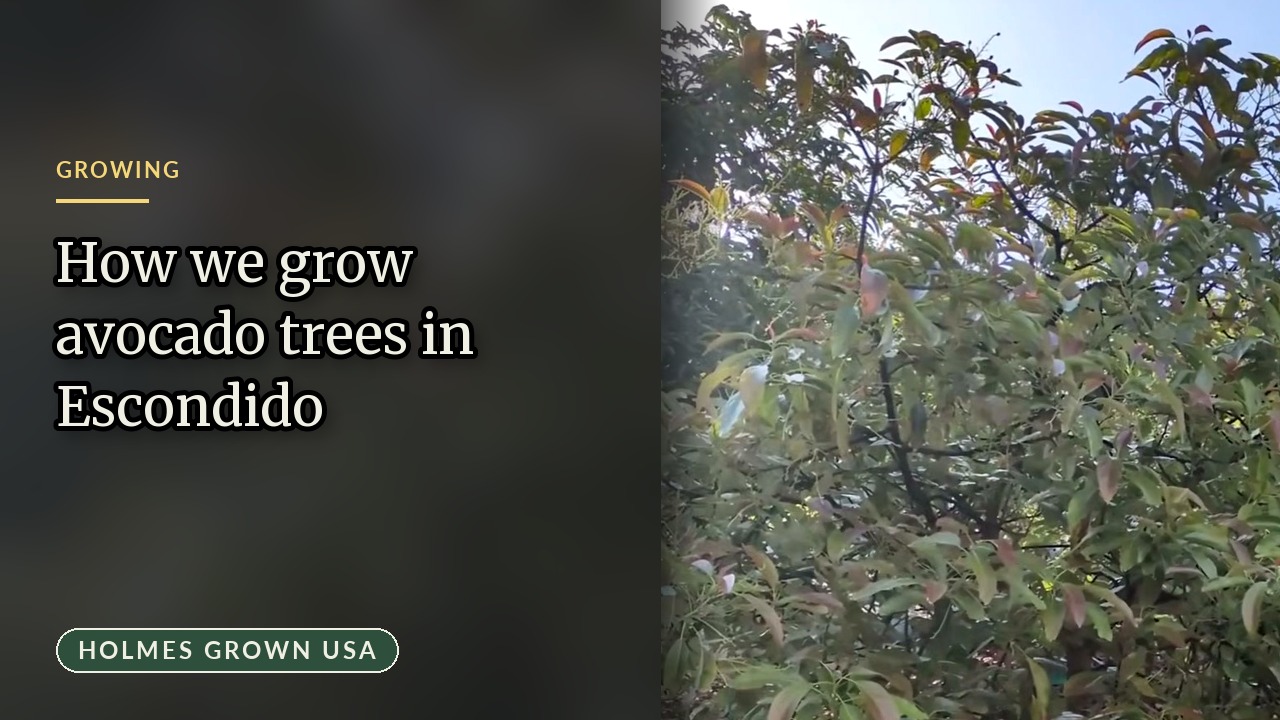
Up in the branches, there are baby avocados everywhere, some barely formed and some noticeably bigger. This is next year’s crop. Avocados take a long time to go from flower to mature fruit, so the babies setting on the tree now will not be picked until next year’s season.
The range of sizes is normal. Avocado bloom stretches over weeks — according to Avocado Production in California: A Cultural Handbook for Growers, Book One, in San Diego County the bulk of the Hass bloom opens over about six weeks, from late March to early May, and a tree can keep flowering for around two months — so the fruit on one tree sets at different times and grows at different rates. Size is not the same as readiness, either; months from now, telling which fruit is mature is its own skill, which we covered in shiny versus dull avocados.
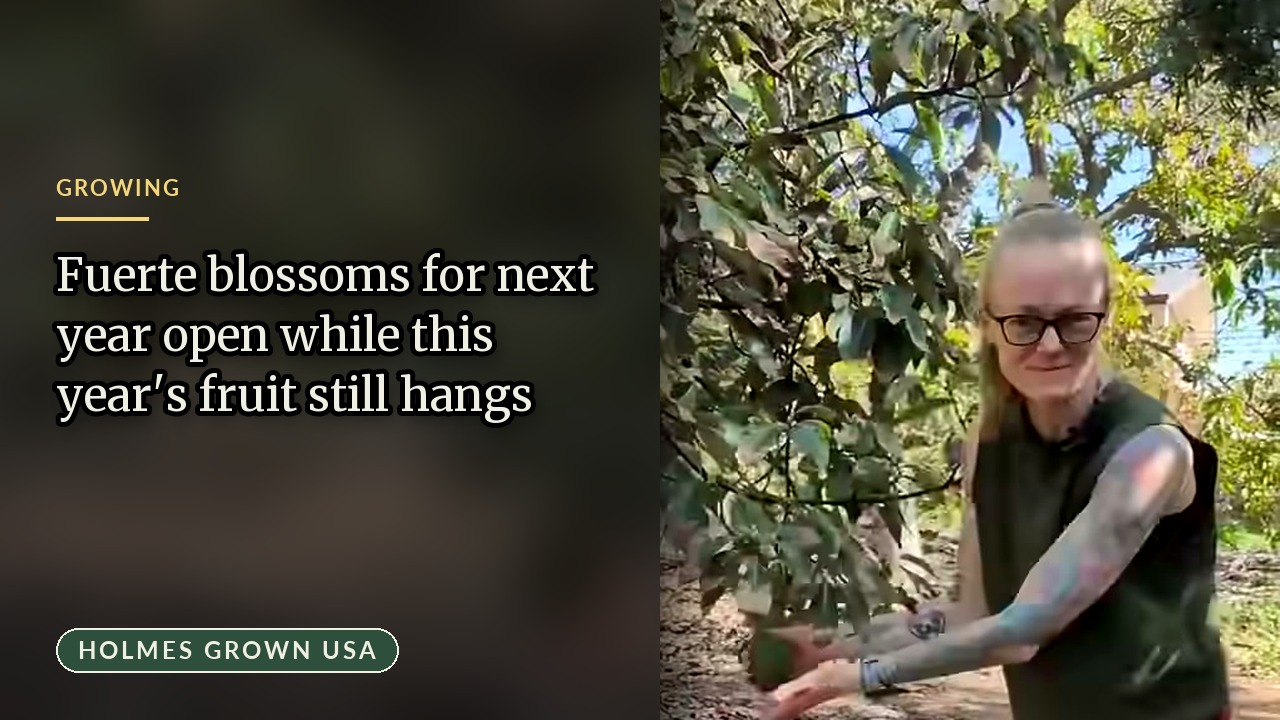
Read nextNext Year’s Blossoms, This Year’s Fruit: Why a Fuerte Season Runs Past 12 Months
What is on the ground
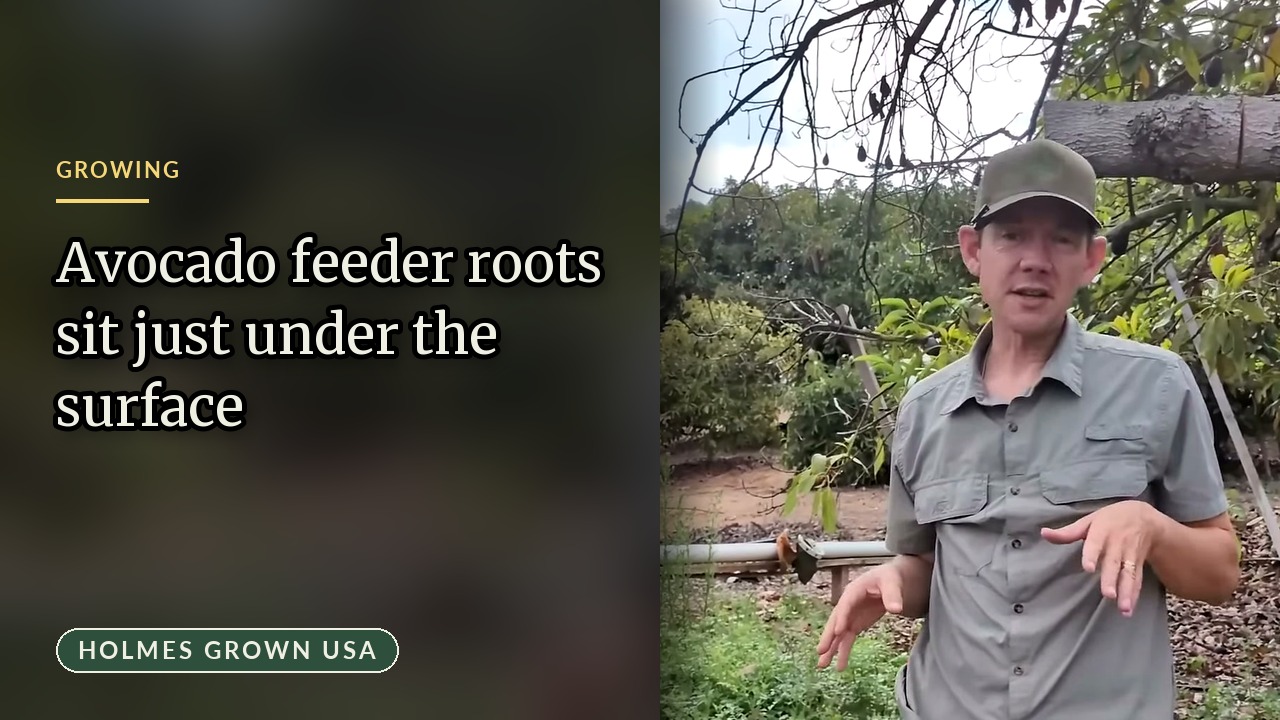
Under this one tree, Kirk counted off ten fallen baby avocados in one small patch (plus a grasshopper, which Avocado Production in California: A Cultural Handbook for Growers, Book Two says harms only young trees), and there were more scattered all around. Every one of those was on the branch not long ago.
This is natural fruit drop. An avocado tree sets far more fruit than it could ever carry to maturity, and it sheds most of it. A mature tree can open up to a million flowers in a spring, yet fewer than 0.1 percent become fruit that hangs to harvest; a good crop of about 200 avocados on one tree works out to roughly 0.02 percent. In the words of the video, sometimes Mother Nature culls her own fruit and her own trees.
Why a little heat matters
We had some heat right before this was filmed. We have been watering, but a warm spell puts stress on a tree carrying a lot of young fruit, and stress tends to show up as more fruit on the ground. Book One is blunt about it: long spells over 100°F cause fruit drop, and temperatures over 105°F in late May or June have been known to drop almost the entire crop of young fruit that had just set.
Watering well helps, and it is the part we control. Book Two’s irrigation chapter warns that missing a series of irrigations for one to two weeks can set off fruit drop and ruin that year’s production, and a mature tree’s daily water use climbs from about 20 gallons in January to nearly 60 in midsummer. Even so, watering does not guarantee the tree keeps everything. We went deeper into the June version of this in June drop in avocados, and into shriveling and sunburned fruit in avocado tree dropping fruit.
So when will we know?
Honestly, not until next year, when the fruit is mature and we are picking it. Between now and then there is more drop to come, a whole summer of heat, and whatever the weather decides to do. Anyone who gives you a firm number from a tree in spring is guessing.
Does a heavy crop this year mean a light one next year?
Often, yes. A heavy set has a cost of its own. In Hass, the spring shoots that carry fruit do not flower the following spring, and Book One names that as the cause of the off year: a big crop uses up the shoots that would have flowered next time. In one set of counts the book reports, 46 percent of shoots flowered in an on year against only 13 percent in an off year, and after a very heavy crop some trees do not flower at all.
The swing can start from either end. A bumper set can tip a tree into an off year, and so can weather that is poor for fruit set. Water stress adds to it; in California it usually means less bloom the following spring. That is one more reason a tree loaded with fruitlets today tells us very little about the crop after this one.
Growers do have a few levers. Book One notes that picking about a third of the Hass crop before April helps the tree return to bloom, and a fertilizer trial described in Book Two found that an extra nitrogen application in April significantly reduced alternate bearing. None of that turns a spring count into a forecast, but it does help even out the years.
That said, it looks like it is going to be a good year. We will take the optimism and keep the calculator in the drawer.
Have avocado questions or comments? Leave them under the video. And while this crop grows, our 4lb and 6lb Hass boxes ship free whenever there is mature fruit to pick — and the waitlist on either page will tell you when that is.
Try this: Look down as well as up. The fruitlets on the ground under a loaded tree are the part that decides what you actually pick.
This post is part of our guide to growing avocado trees.