Not the Kind You Eat: Why Our Avocado Grove Needed 600 Stakes
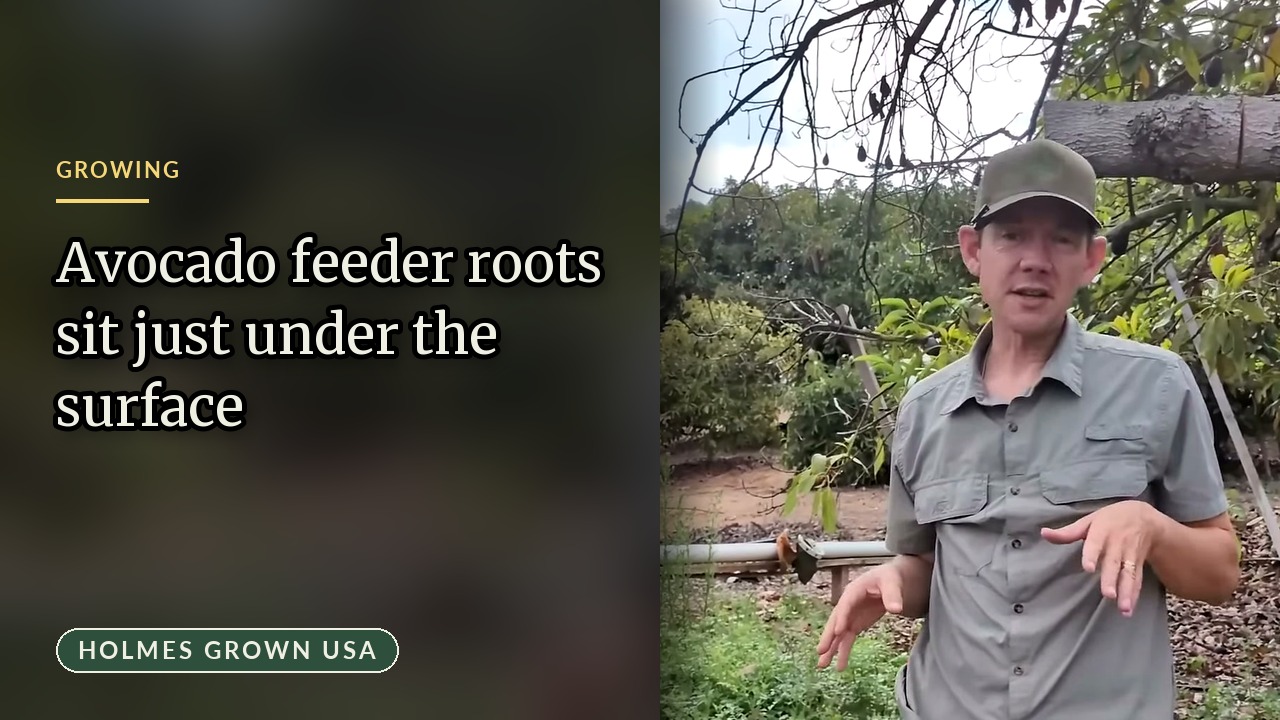
Why do you need stakes to grow avocados? Not the kind you eat. We just brought in about 600 of them for our 10-acre commercial grove, and every one has a job: holding up a branch that is so full of avocados it is being pulled toward the ground.
The reason is strict and simple. Avocados that touch the ground cannot be sold — soil carries bacteria onto the skin, and commercial fruit that has rested on it is out of the supply chain however good it looks. We covered those rules in why ground-dropped fruit can’t be sold, and the technique itself in how to stake avocado tree branches. This post is about the scale of it.
Read nextA Loaded Tree Is Not a Forecast: Why We Won’t Guess Next Year’s Avocado Crop
What 600 stakes across ten acres looks like
Six hundred is not a figure we set out to hit. It is what the grove asked for in a heavy year, counted one sagging limb at a time. On a long branch a single stake is rarely enough, so one limb can swallow three, and a single old tree with several loaded laterals can account for a dozen.
They do not stay put, either. A stake is temporary: once the fruit comes off and the weight lifts, the branch usually holds itself, and the pole is pulled and carried to the next tree that needs it. So 600 stakes is not 600 permanent fixtures. It is a pile of equipment that circulates around ten acres for the length of a season.
What one of these stakes actually is
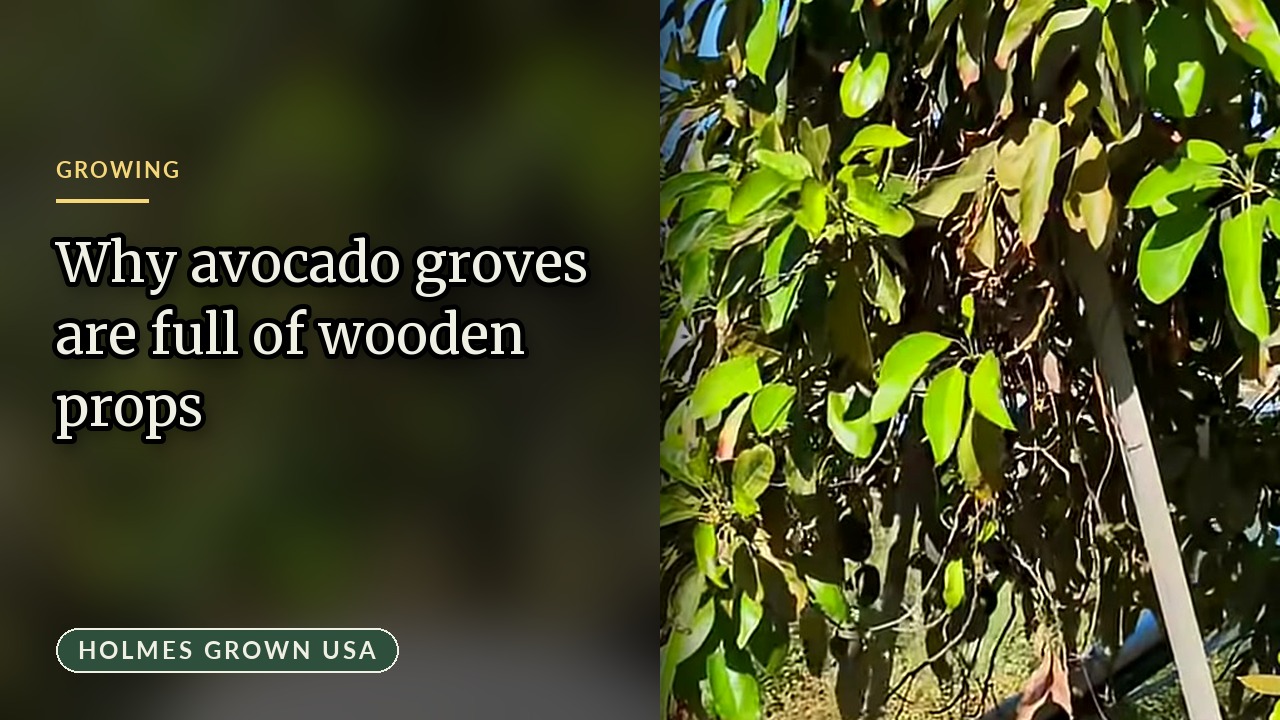
Nothing high-tech. Each one is a long wooden pole with a metal bracket at the very top. The pole goes into the ground beneath a sagging limb, and the bracket cradles the branch and lifts it back to a safe height. In the video you can see one reaching all the way up into the canopy, propping a branch with that bracket.
The length is the part that surprises people. Some of these poles reach well up into the canopy, because the limb that needs help is not always a low one — a lateral can be eight feet off the ground and still be bending far enough under its own crop to put fruit in the dirt by the end of the season.
Why a stake and not a saw
Cutting the low limb off is the other option, and in many groves it is the standard one. The trouble in a heavy year is that the crop goes with the cut. A stake keeps the fruit off the dirt and keeps it on the tree, which buys time until pruning can be done in the right season. We go through that timing in the staking guide.
How low is too low for an avocado branch?
Lower than about three feet is where the trouble starts. Avocado Production in California: A Cultural Handbook for Growers, Book Two says most Phytophthora fruit rot damage happens within about 3 feet of the ground, on fruit touching the soil or hanging on low limbs where rain and sprinklers splash soil up onto it. Its advice is to keep lower limbs 2 to 3 feet off the ground and to always remove skirts that block sprinklers or let fruit lie on the ground, which also causes poor peel color.
That is the target our stakes are aiming for. A loaded branch that has sagged to knee height gets lifted back above that line, the fruit stays clean, and the sprinklers can still throw water under the tree. Lifting the skirt also means ants and snails have fewer easy ways into the canopy, since the handbook recommends skirt pruning so ants can reach the tree only by the trunk.
Do young avocado trees need stakes too?
Yes, but a different kind. The 600 poles in the grove are temporary props for heavy limbs on mature trees. A newly planted tree gets a stake for its trunk instead. According to Avocado Production in California: A Cultural Handbook for Growers, Book One, the bamboo stakes that come from the nursery are of little use. The ideal is two stakes set outside the root ball with the tree tied loosely with 1-inch grafting tape, though most growers use a single 2-by-2-inch stake, which is enough outside windy areas.
When we plant, the stake goes in beside the root ball rather than through it, and we check the ties as the tree grows so the tape never cuts into the bark. Once the trunk can hold the canopy upright on its own, the stake comes out, the same way the grove poles come out once the fruit is picked.
A good problem to have
Needing 600 stakes means the trees are loaded. It is also a lot of walking and a lot of bending in the California sun, and it is one of those parts of growing avocados that nobody sees when they pick up fruit at a store. The stakes come out, the fruit goes in a box, and the poles go back on the pile for next year.
Every avocado kept off the ground is one that can end up in our 4lb or 6lb Hass box, picked the week it ships — and between harvests, join the waitlist on either page and we will email you when fruit is back.
Try this: Count the sagging limbs on one loaded tree and multiply by three. That is roughly the stake count for that tree alone, and why the number gets big fast.
This post is part of our guide to growing avocado trees.