A Garlic Border and a First Tomatillo: Our Guacamole Garden at Three Weeks
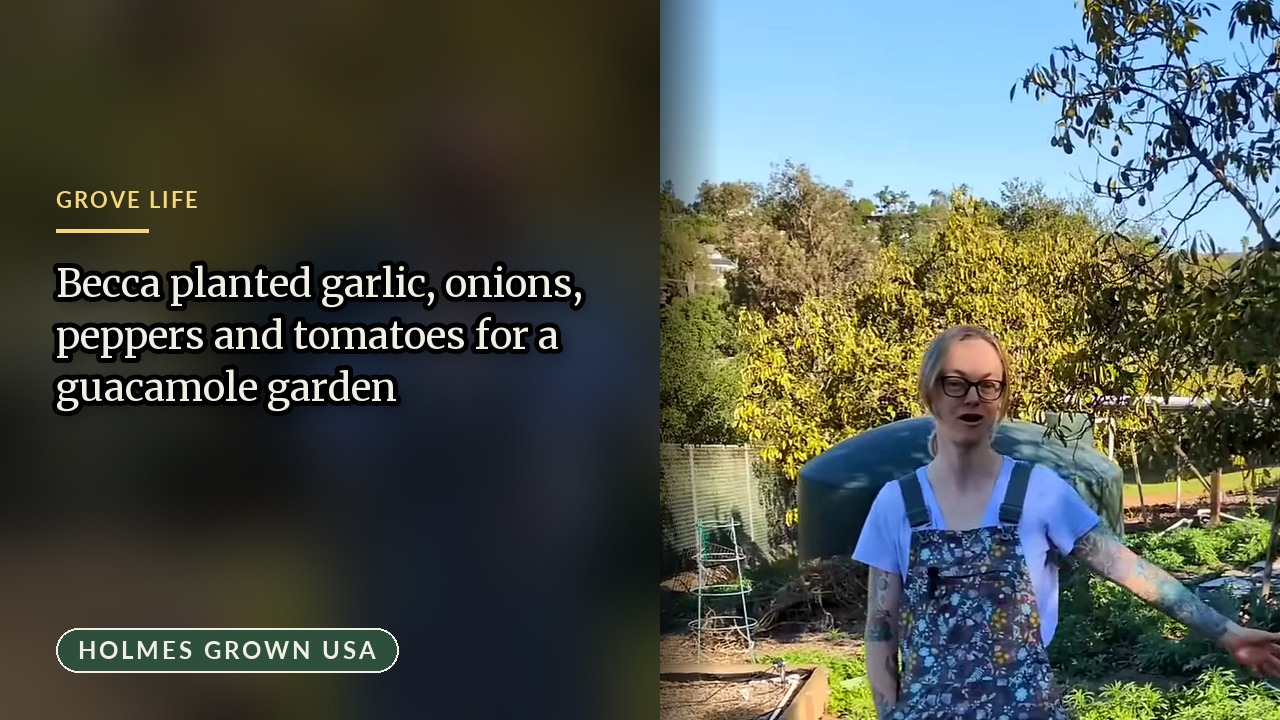
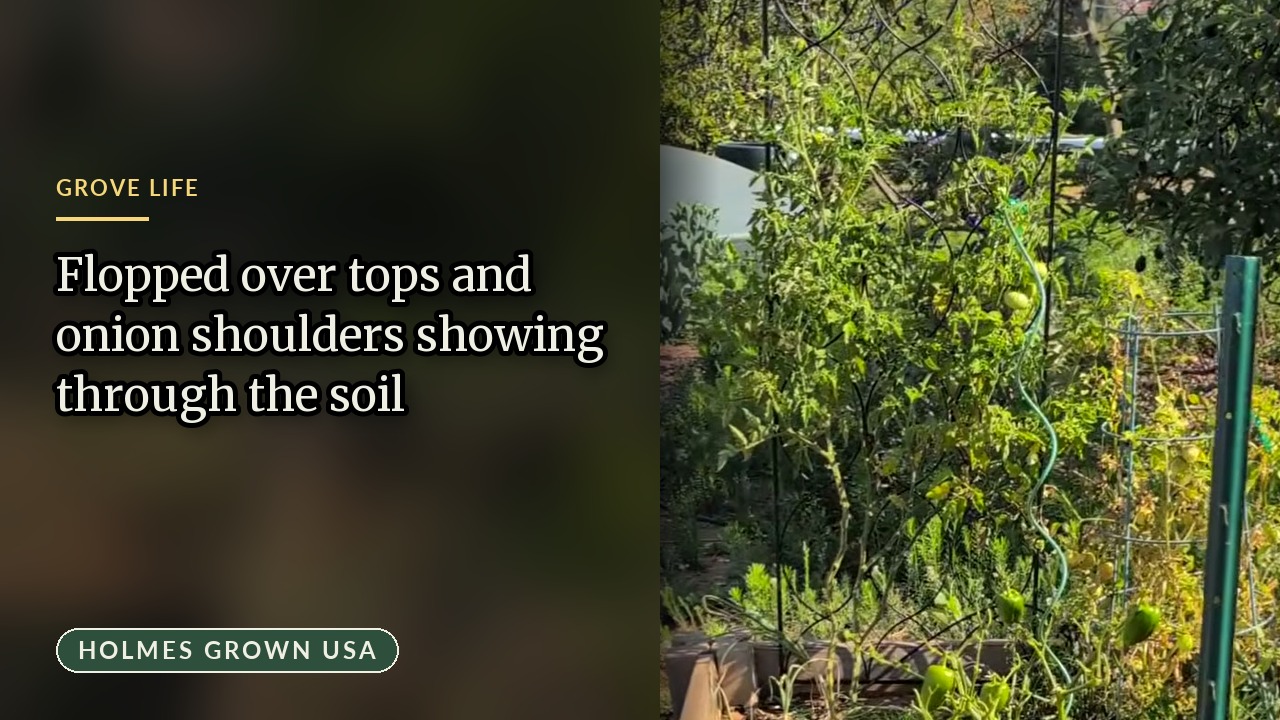
Becca’s guacamole garden had been in the ground for about three weeks when she filmed this update, and almost everything was up and growing: garlic around the edges, red onions, two kinds of tomato, a first-ever tomatillo and three kinds of pepper. The idea is simple — grow everything that goes into a bowl of guacamole or salsa next to the avocados that anchor it.
Here is where things stood at week three.
Why plant garlic around the edges?
All the short green shoots ringing the beds are garlic. Becca planted it around the border, with red onions inside, because garlic is said to help keep ground squirrels away. This garden sits a little further from the house than our other beds, and she was trying to keep the squirrels from treating it as a buffet.
Strong-smelling alliums as a border are an old gardener’s trick. How well they actually deter squirrels is debatable, and we will be honest about the results as the season goes on. Avocado Production in California: A Cultural Handbook for Growers, Book Two, is not encouraging: it says California ground squirrels do not respond to chemical or physical repellents, and it advises dealing with them as soon as even one or two show up, because otherwise damage is inevitable. The onions, at least, are a guacamole ingredient either way.
Read nextGarden Now, Guacamole Later: Planting Beds While the Hass Are Ready
What do ground squirrels actually do on an avocado grove?
It is not the avocados they are after. The handbook notes that ground squirrels will climb the trees but do not seem to eat the fruit. The damage is underground and in the irrigation. They live in colonies of anywhere from two to more than 20, are out during the day, and run about 14 to 20 inches long counting the tail. Their burrows channel rainwater, which can collapse banks and road cuts, and the tunnels damage roots and can kill trees outright. They also gnaw drip lines, and pickers turn ankles in the holes. They hibernate through winter and lie low again in the hottest stretch of summer, so the busy seasons for a squirrel are spring and fall.
That is why a vegetable bed out at the edge of the grove matters to us. Tender seedlings are exactly the green food squirrels eat in spring, so a garden can draw them in toward the trees. The handbook also says fencing is close to useless against them, and that predators do not keep the numbers down. What it does recommend is trapping: box traps left open and baited for several days before they are set, with walnuts, almonds, oats, barley or melon rinds as bait. If the garlic border does not hold, that is where we will look next.
Two tomatoes: an heirloom and a cherry
Tomatoes are Becca’s favorite part. She grew them for the first time last spring and added new varieties this year:
- Omar’s Lebanese, an heirloom, growing strongly with no sign of pests yet (one small fly aside, which she is keeping an eye on).
- Super Sweet 100, a cherry type with much smaller fruit, also looking great.
Both were thriving enough that they might already be ready for their first pruning.
A tomatillo already in bloom
The plant she was most excited about was the tomatillo, the little green husked fruit behind salsa verde. It was her first time growing them, and at three weeks it was already covered in blossoms. She wondered whether tomatillos simply bloom early in the season; she had not researched it yet. The plan is salsa verde to go alongside the guacamole.
Peppers: bell, poblano and jalapeno
Last in the tour were the peppers: a green bell pepper, with poblanos and jalapenos in the middle of the bed. The bell pepper already had a couple of small blossoms.
Gardening on an avocado farm
The kitchen garden is Becca’s project, and it is separate from the grove itself. Avocado trees do not like company under their canopy. Their feeder roots are shallow, other plants compete with them for water and fertilizer, and weeds can harbor pests such as persea mites. The handbook puts numbers on it: 80 to 90 percent of an avocado’s feeder roots sit in the upper 8 to 10 inches of soil, and those roots have very few root hairs, so they absorb water poorly to begin with. It also warns that weeds and cover plants compete for nitrogen, and that weeds around young trees compete strongly for water. We explained more in why you should not grow plants under the canopy, which is why the vegetables live in their own beds. We wrote more about the bigger picture in growing fruit trees on an avocado farm.
When it all comes together, it goes into Becca’s classic guacamole. If your own avocados are a few years off, our 4lb and 6lb Hass boxes ship free in season, with a waitlist on each page for the months in between.
Try this: Plant garlic around the edge of a bed rather than in a row of its own. It does its work from the border.
This post is part of our guide to life on our family grove.