Avocado Pollination Guide: How Planting Wildflowers Boosts Fruit Set
Planting wildflowers next to avocado trees gives bees a reason to be in the grove before the trees bloom, and that matters because an avocado flower only gets one short chance to be pollinated. We are testing seed mixes in a border beside our young trees this fall and in beds out in the grove, so that next spring the pollinators are already working nearby when the avocado flowers open.
The numbers explain why. A mature avocado tree can produce up to a million flowers in a year, yet on average fewer than 200 set and hold to harvest, according to Avocado Production in California: A Cultural Handbook for Growers, Book One. Every visit a bee makes during bloom counts.
The Critical Role of Beneficial Insects in Avocado Orchards
Avocado flowers have a unique flowering habit known as protogynous dichogamy. Each individual flower opens twice over two days: first functionally female, then closing and reopening functionally male. Because the female and male stages do not release and receive pollen at the exact same moment on a single flower, the entire reproductive cycle depends on external pollinators carrying viable pollen between open blossoms.
The timing depends on the variety:
- Type A varieties (like Hass): open female on the morning of day one, close, and reopen male, shedding pollen, on the afternoon of day two.
- Type B varieties (like Fuerte and Zutano): open female on the afternoon of day one and reopen male on the morning of day two.
We go deeper on how the two types work together in Type A and Type B avocados.
While European honeybees are the primary commercial pollinator, a wide variety of native insects contribute to effective pollination:
- Honeybees: Efficient gatherers that work hundreds of blossoms per foraging trip.
- Native sweat bees and bumblebees: Resilient foragers that frequently operate at lower ambient temperatures.
- Hoverflies and soldier flies: Voracious nectar seekers that unintentionally carry high volumes of sticky avocado pollen on their bodies.
- Butterflies: Occasional visitors that help broaden orchard biodiversity and ecosystem health.
Establishing Orchard Buffer Beds for Pollinators
When redesigning the landscape around our home orchard, we integrated a long garden border separating our open grass area from our tree line. This transition zone houses several fruit trees, including a mulberry, a pear, and two young avocado trees. Placing flowering plants along this linear corridor creates a direct path for flying insects to travel straight through the orchard canopy.
Rather than leaving bare soil or competitive turf beneath fruit trees, planting controlled companion beds just outside the drip line provides several distinct advantages:
- Attracting early scouts: Insect scouts map nectar and pollen sources weeks ahead of major bloom events.
- Providing continuous forage: Wildflowers provide nectar when fruit trees are dormant, keeping pollinator colonies nearby.
- Pest suppression: Nectar-rich umbel and composite flowers attract predatory wasps and lacewings that hunt grove pests like avocado thrips and persea mites.
Testing Seed Mixes During Warm Fall Windows
Rather than waiting until spring to test companion flowers, we use our warm autumn weather to sow and monitor different seed mixes. Southern California falls offer mild temperatures and reliable sunshine, giving quick-sprouting annuals and biennial natives ample opportunity to establish before winter slowdowns.
During this testing phase, we focus on identifying two key outcomes:
- Local pollinator activity: While butterfly sightings dwindle as daylight shortens in late fall, bee activity remains elevated on sunny days. Tracking which blooms get the highest number of insect visits informs what we should mass-seed in early spring.
- Growth habit and soil compatibility: Observing how quickly each seed mix germinates and survives along our drip lines reveals which species compete poorly or thrive under our specific water and soil profile.
Seeding Spring Mix Test Beds in the Grove
Out in the grove we broadcast several spring wildflower mixes of annuals and perennials into test beds. We are looking for mixes that meet three criteria:
- Staggered bloom windows: nectar early enough to build bee activity, with flowers continuing through the main avocado bloom.
- High nectar and pollen: enough reward to draw honeybees, bumblebees and native solitary bees close to the trees.
- Low competition: flowers that bring pollinators in without pulling them away from the avocado blossoms once the canopy opens.
Planting the beds doubles as a project for the kids. We clear the aggressive weeds, loosen the surface soil, scatter the seed by hand, work it lightly into the top layer and keep it moist so it germinates evenly. Over the next several weeks we will note which mixes establish best in our microclimate and soil.
Preparing Avocado Trees for Heavy Spring Fruit Set
The goal of testing pollinator companion plants now is directly tied to spring grove readiness. When avocado flower panicles burst into bloom between March and May, millions of delicate flowers open simultaneously across the canopy. If a healthy, active pollinator population is already anchored nearby, flower visitation rates skyrocket, leading to uniform fruit set and higher retention.
Investing in companion beds and evaluating floral mixes is a straightforward, sustainable management practice that strengthens tree health, enriches backyard soil ecology, and ultimately puts more homegrown avocados on the table.
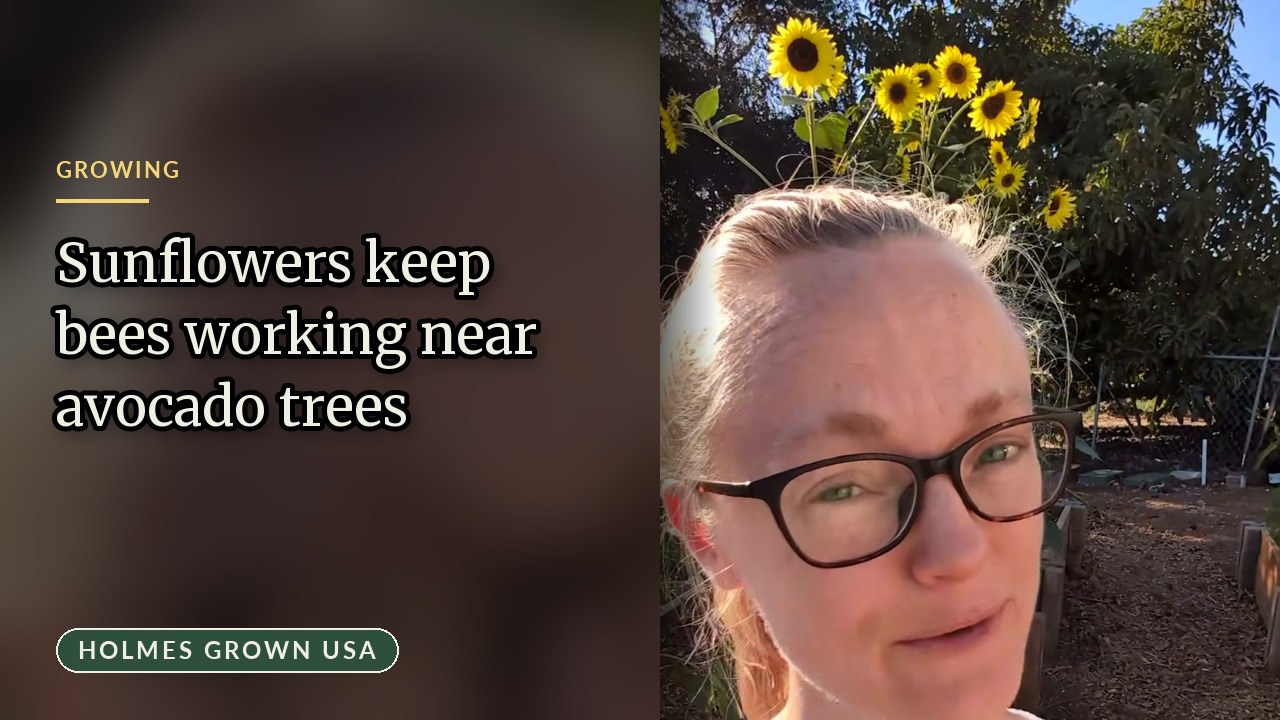
If you are planting your own trees, our complete guide to growing avocado trees covers watering, pruning, harvest and the rest of the year in the grove. We also tried sunflowers for the same job.