What’s Growing at Our House in August: Avocados, Citrus, Fruit Trees and Garden Beds
We grow avocados for a living, but the property around our house grows a lot more than that. In this quick August walk-around we tried to show everything that was growing, in about the order you would pass it.
The honest summary: a lot of Hass avocados, and then a surprising amount of everything else.
The avocados
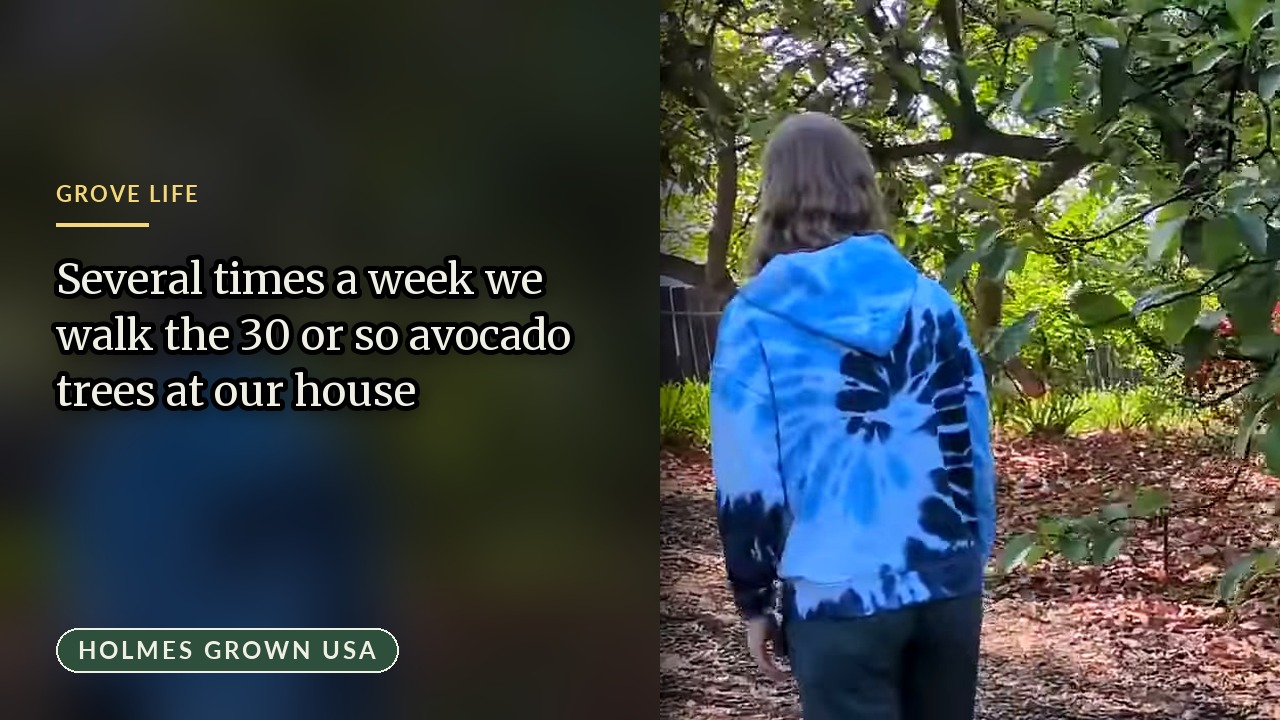
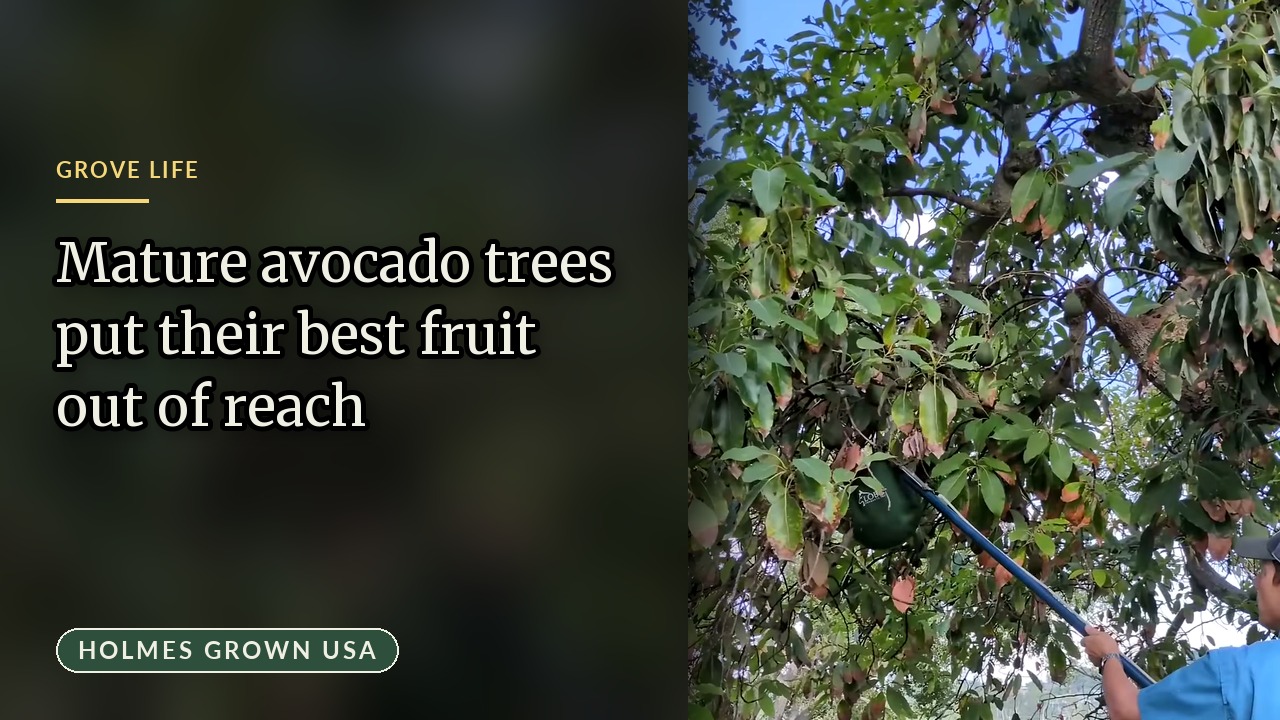
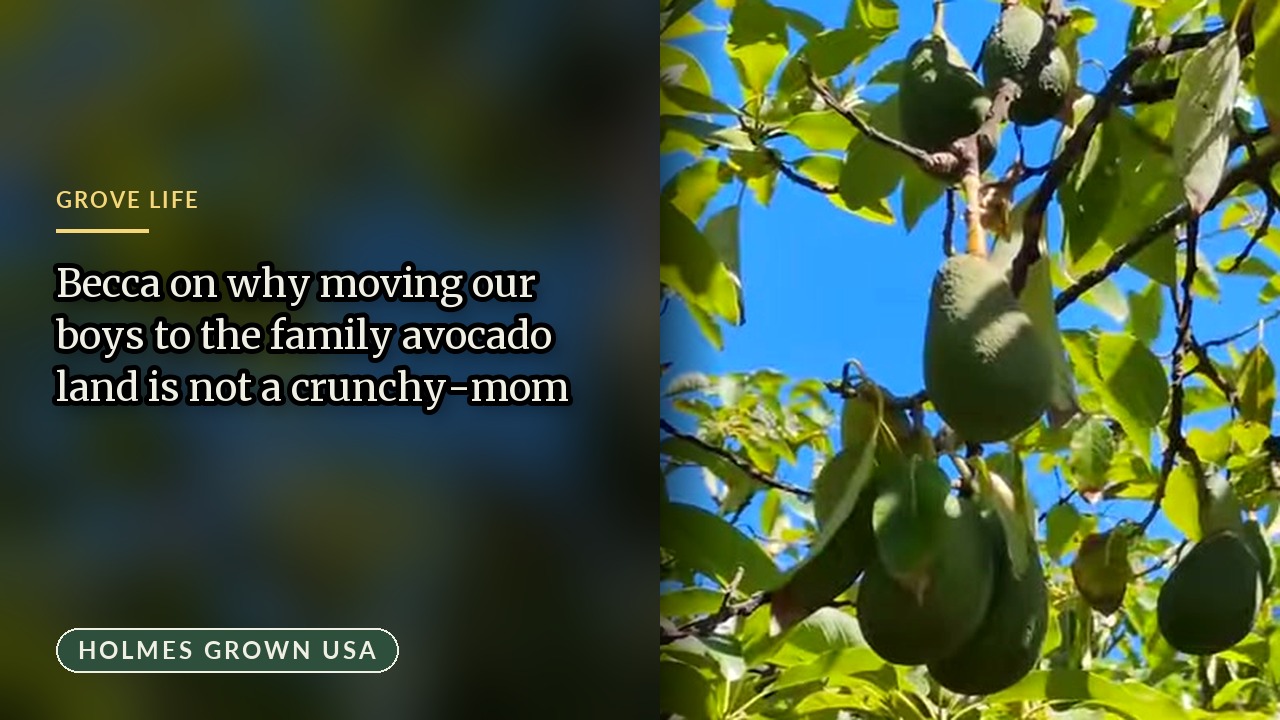
Hass avocados, more Hass avocados, and then more Hass avocados. The grove at the house is a little under an acre, roughly 30 trees, separate from our 10-acre commercial grove. The trees at the house are where online orders get picked, so they are the backbone of the place, and in August they are carrying fruit. It is a good month to see how the crop is sizing up.
Why are Hass avocados still on the tree in August?
People are sometimes surprised to see so much fruit hanging in late summer. Hass is mostly Guatemalan in its ancestry (roughly 85% Guatemalan and 15% Mexican), and Guatemalan-type avocados take a long time from flower to fruit — a year or more. So the fruit you pick in a given summer mostly comes from blossoms that opened the spring before.
Once it is mature, Hass also holds well on the tree, so a grove does not have to pick it all at once. Avocado Production in California: A Cultural Handbook for Growers, Book One, puts the San Diego County Hass season at roughly January through August, though on our own trees the main crop runs March through September, so August is late in the season rather than the end of it. It also means the trees can be carrying two crops at once for a while: the last of this season’s fruit, and the small fruit set by this spring’s bloom.
August is also quietly the start of next year. The same handbook notes that avocado buds switch from leafy growth to flower buds at the end of the summer growth flush, usually in August in California. Those buds become next spring’s blossoms.
How much water does an avocado tree use in August?
More than at any other time of year. Avocado Production in California: A Cultural Handbook for Growers, Book Two, works through water use for a mature tree with a 20-foot canopy in Escondido, just down the road from us, and puts peak summer demand at about 57 gallons per tree per day in July, compared with roughly 20 gallons in January. August sits close to that peak. The handbook also warns that setting a timeclock once and leaving it usually ends up under-watering in summer and over-watering in the cooler months.
That summer load matters for everything else on this list. The fruit trees and garden beds between the avocados are all drawing on the same warm weather, and the avocado feeder roots are shallow, with most of them in the top 8 to 10 inches of soil. When we plant something new near the grove, we keep it out from under the canopy so it is not competing for that water. For the full picture, see our guide to how much water an avocado tree needs.
Late summer is also when the handbook says to pull leaf samples for nutrient testing, using the youngest fully expanded leaves from August through October. So August is a working month in the grove, not just a harvest month.
What else is growing?
Tucked between the avocado trees and around the property, in August we had:
- A volunteer fig — one we did not plant, which came up on its own.
- Watermelon and yellow zucchini in the garden.
- Citrus: oranges coming in, mandarins, grapefruit, tangerines, and more oranges.
- Deciduous fruit trees: an apple tree, a mulberry, a pear and a peach.
- Raspberries.
- Tomatoes and peppers.
The walk ended with a little harvest basket for the evening — which is really the point of all of it.
Why grow all this on an avocado farm?
The avocados are the business. The rest is for us. Growing a good share of our own fruit and vegetables means fresher food on the table, less reliance on the grocery store and a lot of learning along the way. We wrote more about that thinking in growing fruit trees on an avocado farm.
It also changes how you see abundance. When one warm month produces this much variety from a single property, it is hard not to think about what we have learned in food scarcity versus natural abundance.
A note on the mix
Southern California lets you grow citrus, stone fruit, berries and summer vegetables within a few steps of each other, which is part of why San Diego County agriculture is so varied. Not everything thrives equally, and some of these trees are young. But August is when the whole property feels alive.
If you would like a taste of the main crop, our 4lb and 6lb Hass boxes are picked from these same trees and ship free; between harvests, join the waitlist on either page and we will email you when fruit is back. And for a day in the life beyond August, see avocado grove lifestyle.
Try this: Walk your own place and list what is actually fruiting this month. The mix is usually wider than you remember.
This post is part of our guide to life on our family grove.