Hass vs Fuerte: Why Your Grocery Store Only Sells One
Walk into any supermarket in America and you will find one avocado. Pebbly, dark, firm-skinned Hass. That is it.
People reasonably assume this is because Hass is the best avocado. That is not the reason. Hass dominates the shelf because it survives the journey, which is a different thing entirely — and once you know it, the produce aisle makes a lot more sense.
Why Hass won the supermarket
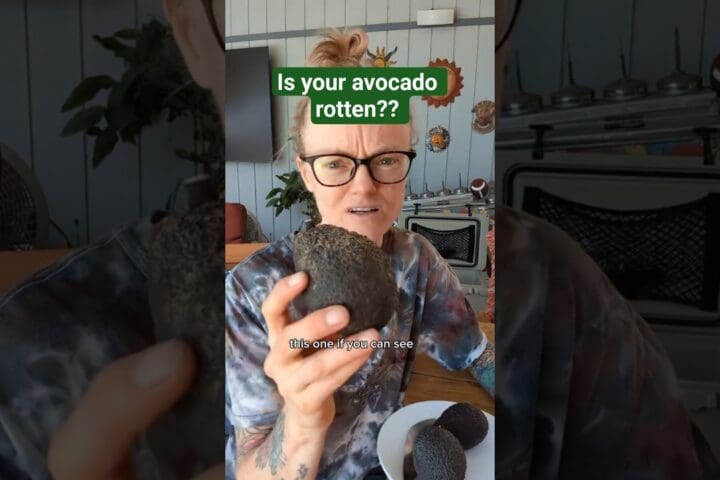
Hass has a hard, thick, pebbled skin, and that skin is armour. It means the fruit can be picked, packed, trucked across the country, handled several times along the way, and still arrive looking like something you would pay for. The dark colour helps too: it hides bruises and fingernail marks from pickers that would show on a green skin.
It also out-yields Fuerte and has the longest harvest season of any California variety, which matters enormously to a buyer planning volume a year ahead. Over 19 years of records through 1982, Hass groves averaged 7,249 pounds per acre against 4,842 for Fuerte. Hass has on and off years too, but its swings are usually milder. Travel, yield and a long season are exactly what a national distribution chain is built on. Hass is the industry standard for sound commercial reasons.
We grow it, we sell a lot of it, and it is genuinely excellent fruit.
What Fuerte is actually like
Fuerte is the one we quietly prefer.
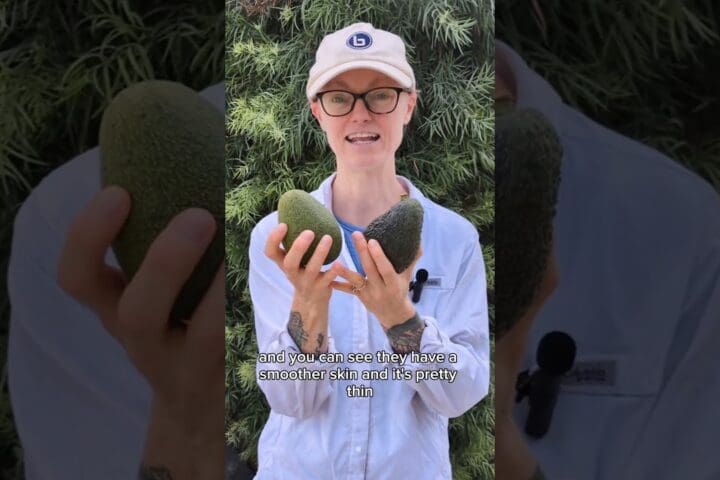
The skin is smoother and thinner, and a noticeably brighter green. The flesh is richer and more buttery than Hass, with a silkier texture that tends to convert people the first time they try the two side by side. It is the heritage California variety, and it was here long before Hass took over.
We are not alone in that preference. The UC handbook Avocado Production in California notes that Fuerte is still thought by many in the avocado industry to be the best-tasting avocado. Hass has its own case: Rudolph Hass loved his tree’s creamy, fiber-free flesh and nutty flavour, and the handbook credits Hass with the best overall quality of the commercial varieties.
So why can you not buy one?
That thin skin is the whole answer. What makes Fuerte lovely to eat makes it difficult to ship at scale. It bruises where a Hass would shrug it off, and it is prone to breaking open in transit. A pallet of Fuerte that has crossed three states is not a pallet a grocery buyer wants to unpack.
There is a second problem. Fuerte tends to have an off year — its fruit set is erratic, and Fuerte groves usually swing between heavy and light crops more than Hass groves do. If you are a retailer promising the same fruit every week of the year, a variety that halves its own crop on its own schedule is not workable.
So Fuerte gets grown, eaten close to where it was picked, and mostly never leaves the region.
Hass vs Fuerte at a glance
- Skin: Hass is pebbly and turns black when ripe; Fuerte is smoother, thinner and stays green.
- Size and shape: Hass runs about 6 to 14 ounces; Fuerte about 8 to 14, pear-shaped with a flat spot on one bottom corner.
- Season in California: Hass is picked roughly January to August in San Diego County, later further north; Fuerte from about November to March.
- Flower type: Hass is a Type A variety and Fuerte a Type B, which is why the two can help each other’s pollination when planted near each other.
- Cold: Fuerte is the hardier of the two. Hass fruit is damaged at about 29°F held for four hours; Fuerte fruit holds to around 26-27°F.
- Yield: Hass is the heavier and steadier producer; Fuerte fruit set is erratic.
How did Hass take over?
Slowly. Rudolph Hass patented his tree in 1935, but for decades Fuerte remained the variety California was built on. Hass made up 15% of the state’s crop in 1957 and only passed Fuerte in volume in 1972, forty years after its introduction. Colour was part of the delay: eastern buyers used to green fruit were slow to accept a black avocado, and a 1927 shipping report said flatly that “the market in the east doesn’t want black fruit.” By 1990 Hass was 83% of California production and Fuerte 2%, and by 2011-12 Hass was nearly 97%. We tell the story of the original tree in Hass avocado patent 139.
Growing them is different too
It is not only about shipping. Fuerte asks for different handling on the tree and through harvest — the same delicacy that bruises it in a truck makes it easier to damage coming off the branch. The growing practices are genuinely not interchangeable between the two.
The seasons differ as well, which is why our year runs Hass first and Fuerte after. We went into that in the transition from Hass harvest to Fuerte season.
The one real advantage of buying direct
A box that is picked the week it ships and goes straight from our trees to your door does not have to survive a distribution chain. That is the whole reason varieties which cannot travel commercially are suddenly available to you at all.
If you want the fuller picture of how the varieties compare on the plate, our guide to avocado varieties covers Hass, Fuerte and the others on taste and texture.
Our 4lb and 6lb Hass boxes ship free, going out once a week while the season lasts. Fuerte appears when the season allows which, now you know about the off years, you will understand is not something we can promise far in advance.
This is part of our complete guide to choosing, ripening and using avocados — when the season runs, how the varieties differ, how to ripen fruit at home and what to do with it.