How to Choose, Ripen and Use Avocados
Almost everything about choosing and using an avocado comes back to one fact: avocados mature on the tree but only ripen after they are picked. That is why growers can leave fruit hanging and pick to order, why store fruit behaves the way it does, and why a box from a farm arrives firm. This guide gathers what we have learned, as growers and in Becca’s kitchen, about when to buy, which avocados to try, how to ripen and store them, and what to make with them. People have understood the ripening part for a long time: a Spanish account from 1526 describes avocados gathered before they are ripe and stored, ripening perfectly that way.
When is avocado season?
It depends on the variety, and our own posts describe the Hass window a little differently. For decades California required Hass to reach 8 percent oil before it could be sold, and we still use that as our rule of thumb; on our trees it usually arrives around March (the 8% oil rule). One of our videos describes the California Hass season as March through October, with the peak in June and July (when is California Hass season?); another says ours can start as early as January, with March through June the main harvest (can you buy our avocados in Las Vegas?). Avocado Production in California, the growers’ handbook published by UC Cooperative Extension and the California Avocado Society gives a similar spread: January through August in San Diego County, and as late as June through October in the cooler northern counties of Santa Barbara and San Luis Obispo. In practice our own picking has wound down somewhere between June and late summer, depending on the year and the crop, and we put out a last call when it does.
Late in the season, Hass can come off the tree looking darker. That is long hang time, not ripeness, and Kirk thinks that fruit is probably better for its higher oil (why late-season Hass look darker). One caution from the handbook: very late Hass can turn rancid quickly once it softens, so eat late-season fruit soon after it ripens, while the earliest fruit of the season is less flavorful. Fuerte follows Hass, roughly November through February on our trees (Fuerte season, our Hass season wrap-up). The handbook’s picking window for Fuerte is November to March.
Hass, Fuerte and 300 others
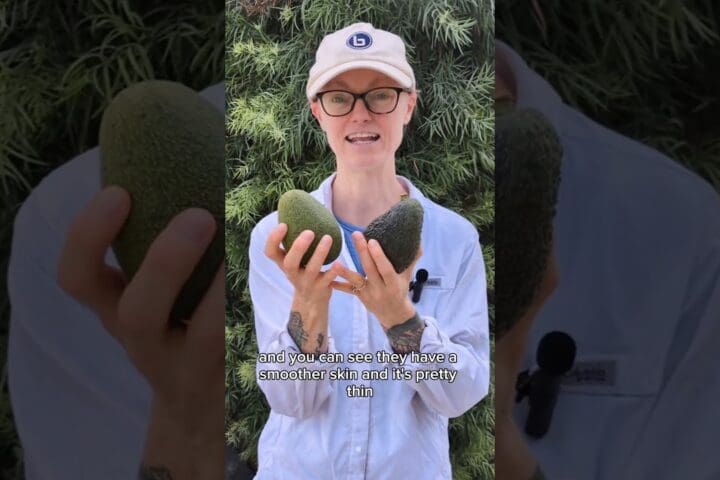
There are more than 300 named avocado varieties, and most people have only ever eaten one (over 300 named varieties); as long ago as 1926, one count listed 400 named varieties in California alone. Hass dominates the stores because its thick skin ships well, not because it is the only good one (Hass vs Fuerte). It does have real strengths: the handbook credits it with the best overall quality and the longest harvest season of the California varieties, and its dark skin hides bruises and fingernail marks. Fuerte is our family’s favorite: thin, smooth green skin that stays green as it ripens, and flesh we describe as nutty and buttery, a little oilier and earthier than Hass (why Fuerte is our favorite). Plenty of people agree; the handbook notes that many still consider Fuerte the best-tasting avocado. Southern California also grows Bacon, Lamb Hass, Reed and more, while Florida grows a largely different group of varieties (three facts we learned this year). Our guide to avocado varieties covers how they taste, and the growing guide covers them on the tree.
If you find other California varieties at a farmers’ market or farm stand, here is roughly what to expect, going by the handbook. Reed is big and nearly round, green when ripe, with rich, nutty flesh that does not darken when cut, and comes in summer, roughly July through September. Lamb Hass looks like a larger, broad-shouldered Hass, turns black as it ripens, and starts later, around May or June. Bacon is an early-winter green, November through January, with medium-quality flesh. Pinkerton is green and pebbly with a long neck, a small seed and very good flavor, picked January to May. GEM is a black, Hass-like fruit whose cut flesh stays green much longer than Hass. Florida’s avocados are mostly West Indian types and their hybrids, a different race with lower oil and a milder flavor, which is why they taste so different from California fruit.
Why store avocados behave the way they do
Most avocados in US stores are imported (California vs imported avocados). Mass-market fruit is usually picked early, held in cold storage for weeks and treated with ethylene to force the ripening along, which is why it so often goes from rock hard to rotten overnight. When you cut one open and it is slimy or watery inside, the likely culprits are chilling or rough handling somewhere in the supply chain, or rot that got in at the stem after picking (why a store avocado is slimy inside). The disease chapter of the growers’ handbook backs both up: stem end rot enters through the freshly cut stem at harvest and spreads as the fruit ripens, and fruit held below about 41°F risks chilling injury, which is why packers cool fruit quickly to about that temperature and no lower.
The matching sizes are sorting, not nature: packing houses grade fruit by size and send each store the sizes it wants (why store avocados are all the same size). Farm fruit comes as the tree grew it, giants, bumps and sideways stems included, and a cosmetic blemish does not change the flesh (why our avocados don’t match). The handbook agrees for the most common marks: the leathery scars avocado thrips leave on the skin, and the spots scale insects leave, do not affect the fruit inside, though they cost the grower in the packinghouse grade. Kirk also has a theory, from experience rather than a lab, that measured irrigation makes California fruit richer and less stringy than fruit from rain-fed regions.
Ripening at home: what our tests showed
We tested the fridge, the counter and a paper bag with our own fruit (setting up the test). By day five the bagged avocado was about two days ahead of the counter and the fridge avocado had barely changed. By day eight the bagged one had been ready on day seven, the counter one on day eight, and the one in the fridge had done nothing in a week: the fridge is a pause button. The comparison was not perfectly like for like (the bag fruit in the final round was a Hass, the counter fruit a Fuerte), and a separate test of the banana-in-a-paper-bag trick came out backwards.
Timelines vary with variety, fruit size and a warm or cool kitchen. Warmth speeds rot as well as ripening: the handbook notes that anthracnose, a common rot that shows up only as fruit ripens, develops faster at 75°F and above and slows below 59°F, so a cool counter beats a sunny windowsill. Across our videos we have described fresh-picked fruit on the counter taking anything from about six to ten days to ripen, and one says a ripe avocado then stays good for about four more days. The plan that came out of the tests: keep firm fruit in the fridge, pull it out about a week before you need it, and use a paper bag to gain a day or two. Our guide to ripening avocados has the full method, and how long shipped avocados last covers a box that has just arrived.
Stems, color and knowing when it’s ready
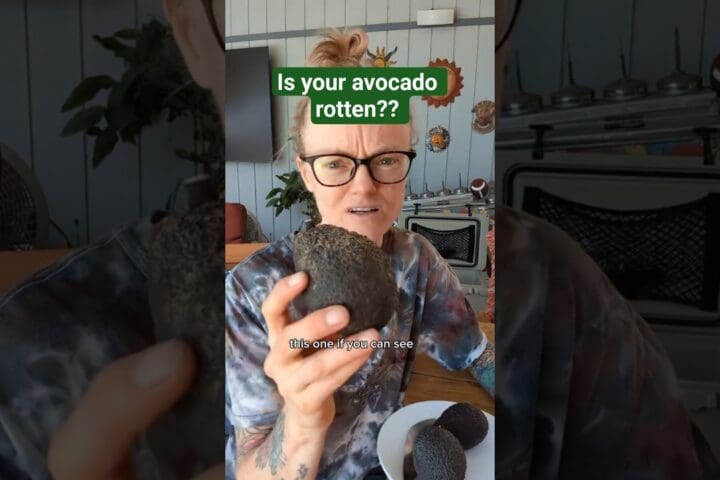
We trim stems short before shipping rather than pulling them off, because a pulled stem leaves an open scar where air and rot get in; in our experience, popping the stem off also nudges ripening along (why we trim stems short). Judge ripeness by a gentle press near the stem end, not by color. A Fuerte stays green when it is ripe, and a dark late-season Hass can still be firm. Wrinkles or dark patches do not always mean an avocado has gone off; how to tell if an avocado is bad separates real problems from cosmetic ones.
Buying straight from the farm
We boil the case down to three reasons: fruit hand-picked for your box, no weeks in cold storage or a ripening room, and money that goes directly to a family farm (three reasons to buy from the farmer). We ship once a week and pick each order that same week, so the fruit does its ripening on your counter. Boxes are sold by weight rather than count, so the number of avocados changes as fruit size changes through the season (box weight vs count). You will not find our avocados in stores, even in Las Vegas, but boxes get there quickly (why we ship instead). How a box is picked and packed is in life on our family grove.
Cooking with avocados
Becca’s kitchen runs on whole foods, and avocado does a lot of the work that cream or butter would. Three medium avocados make a five-ingredient chocolate mousse; half of one thickens a chocolate protein shake; and blended with chia it sets overnight into make-ahead chia pudding (the full recipe is our avocado chia seed pudding, and there is a carob version). For dips, blend the tahini base first for a smoother avocado hummus (or try our written hummus recipe), and there is always classic guacamole.
For meals, try a paleo poke bowl with canned salmon or sardines, avocado toast with bacon and a fried egg, avocado pesto chicken pasta or tuna salad-stuffed avocados. For something fresh, there is avocado strawberry salsa, caprese stacks with avocado in place of mozzarella, and the avocado caprese salad. One lesson learned: we would not bake bacon and shrimp stuffed avocados again, because the heat takes away what makes avocado good. Ripe-but-firm fruit holds its shape for slicing; softer fruit is for guacamole. A stainless steel avocado scoop helps with all of it, and there is more on why we eat this way in paleo chicken veggie soup, the avocado and greens smoothie, avocado nutrition and sustainability and saving the last fruit of the season for recipes.
If you want to try all of this with fruit picked the week it ships, our 4lb and 6lb Hass boxes ship free in season, and the 4lb Fuerte box follows in its turn. Between harvests, join the waitlist on any of those pages and we will email you when fruit is back.
What an avocado is worth nutritionally
A third of a medium avocado carries 80 calories, 8 g of fat that is mostly monounsaturated, 3 g of fiber and no sugar, sodium or cholesterol. A whole one is about three of those servings, which puts it near 9 g of fiber — a real dent in the 28 g a day most people miss.
The more interesting finding is that avocado raises how much of the surrounding food you absorb: adding it to salsa lifted lycopene uptake more than fourfold in trial conditions, because carotenoids need fat to cross into you. The avocado belongs in the salad, not beside it.
We went through the clinical evidence properly, including the 1,008-person trial whose main result was null, in avocado nutrition facts and what the research actually shows.
Every post in this guide
Here is everything we have published on this subject so far, grouped by topic. We add new posts as we film them.
Seasons and varieties
- When Is California Hass Season? The Best Months to Buy Hass Avocados
- Last Call for Hass: Ordering Straight From the Tree Before the Season Ends
- Why Late-Season Hass Avocados Look Darker (and Why That Is Not a Bad Sign)
- Over 300 Named Avocado Varieties: What Buying From the Farmer Opens Up
- Why Fuerte Is Our Family’s Favorite Avocado
- Three Avocado Facts We Learned This Year: Varieties, Tree Size and Ripening
- Hass vs Fuerte: Why Your Grocery Store Only Sells One
- Avocado Varieties: Types of Avocados and How They Taste
- Fuerte Avocado Season: Transitioning from Hass Harvest to California’s Heritage Variety
- Hass Avocado Season Wrap-Up: What to Expect as Fuerte Season Arrives
Store fruit vs farm fruit
- Why Grocery Store Avocados Go From Rock Hard to Rotten Overnight
- Why Is My Store-Bought Avocado Slimy Inside? Two Likely Causes
- Why Are Grocery Store Avocados All the Same Size? The Sorting Happens After the Grove
- Too Big, Too Small, Grown Sideways: Why Our Avocados Don’t Match
- Richer, Less Stringy: Why We Think Irrigation Shapes a California Avocado
- Hand-Picked, Never Gassed: Three Reasons to Buy Avocados From the Farmer
- Can You Buy Our Avocados in Las Vegas? Why We Ship Instead
- California vs Imported Avocados: What’s the Difference?
- Avocado Box Weight vs Count: How Seasonal Sizing Affects Farm-Direct Orders
- How Long Do Shipped Avocados Last? A Grower’s Honest Answer
Ripening, storing and judging ripeness
- Fridge, Counter or Paper Bag? Setting Up Our Fuerte Ripening Test
- Day Five of Our Fuerte Ripening Test: The Paper Bag Pulls Ahead
- Day Eight Results: Counter, Paper Bag or Fridge for Ripening Avocados
- The Banana in a Paper Bag Trick: Our Fuerte Test Came Out Backwards
- Why We Trim Avocado Stems Short Instead of Pulling Them Off
- How to Ripen Avocados
- How to Tell If an Avocado Is Bad (and When It Only Looks Bad)
Recipes and the kitchen
- Avocado Chocolate Mousse: A Five-Ingredient Blender Dessert
- Avocado Chocolate Protein Shake: Thick, Creamy and Ready in One Blend
- Make-Ahead Avocado Chia Pudding: Four Grab-and-Go Servings From One Blend
- Blender Avocado Hummus: Blend the Tahini Base First, Then Add the Avocado
- Paleo Poke Bowl with Avocado: Becca’s Cauliflower Rice Lunch
- Classic Avocado Toast With Bacon and a Fried Egg
- Avocado Pesto Chicken Pasta: A Weeknight Idea From Our Kitchen
- Avocado Strawberry Salsa: Four Ingredients, Plus Salt and Citrus
- Three-Ingredient Avocado Caprese Stacks (No Mozzarella)
- Bacon and Shrimp Stuffed Avocados: Why We Would Not Bake Them Again
- Paleo Chicken Veggie Soup and Why Whole Foods Anchor Our Kitchen
- Classic Guacamole
- Avocado Hummus
- Avocado Caprese Salad
- Tuna Salad-Stuffed Avocados
- Avocado Chia Seed Pudding
- Avocado Carob Chia Seed Pudding
- Avocado + Greens Smoothie
- Avocado Harvest Season Wrap-Up: Saving the Last Fruit for Kitchen Recipes
- Avocado Water Footprint and Nutrition: The Truth About Avocado Sustainability