Healthy Avocado Tree but No Fruit? Two Things We Check First
Why isn’t your avocado tree producing avocados? There can be a number of reasons, but two come up again and again. Either the flowers are not being pollinated well, or the tree is not getting enough water and nutrients to carry a crop.
Both are fixable, and both are easy to check. Here is how we think about each one, using the trees on our own property as the example.
Reason one: poor pollination
Avocado flowers have an unusual habit. Each flower opens twice: once as a female, when it can receive pollen, and once as a male, when it sheds pollen. The two openings happen at different times, which makes it harder for a flower to pollinate itself.
Varieties fall into two groups based on that timing:
- Type A (Hass is the best known): flowers open as female on the morning of the first day, close, then reopen as male on the afternoon of the second day.
- Type B (Fuerte is a classic example): flowers open as female in the afternoon, close overnight, then reopen as male the next morning.
Put a Type A and a Type B near each other and their schedules complement each other: when one variety’s flowers are shedding pollen, the other’s are ready to receive it. That is why we have a Hass tree planted next to a Fuerte.
Do you need two trees?
Not strictly. Thankfully, a lone avocado tree can still set fruit. In cool spring weather the openings drift off schedule, so a single tree can carry female-stage and male-stage flowers at the same time, and University of California work found that self-fertilization accounts for a substantial share of fruit set in California groves. But pairing a Type A with a Type B gives you more chances at pollination, and in our experience that means more production.
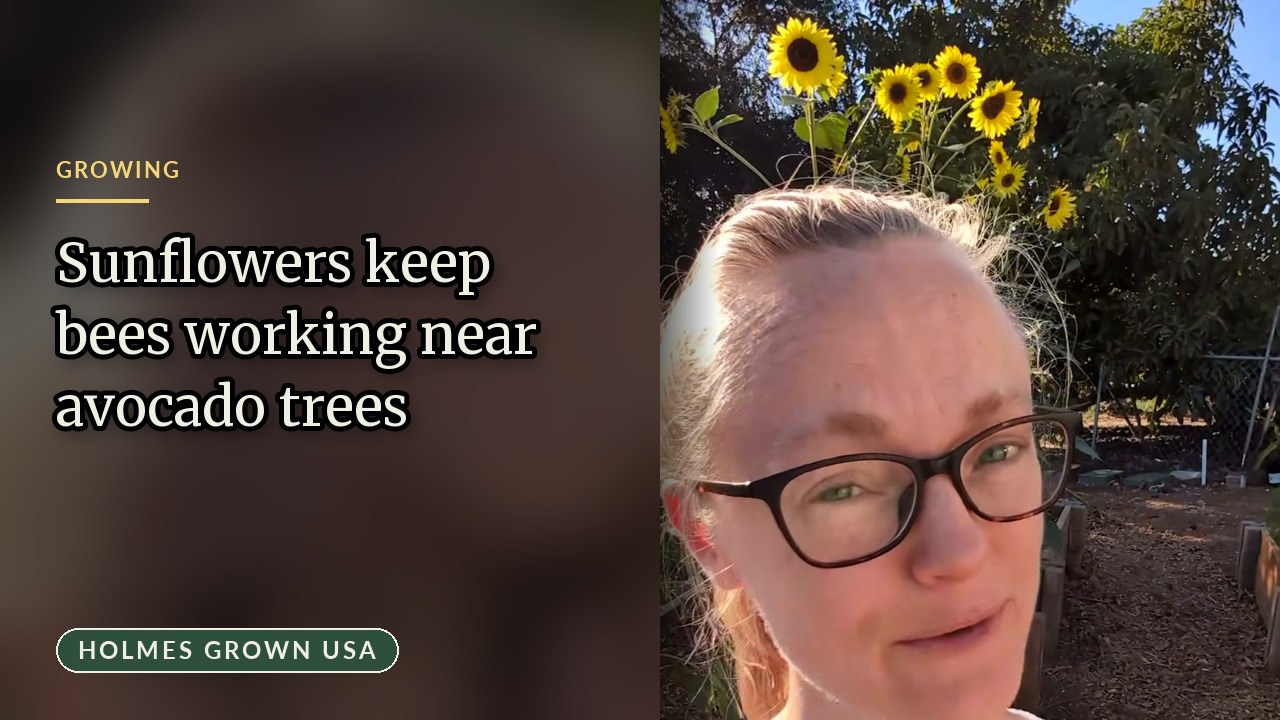
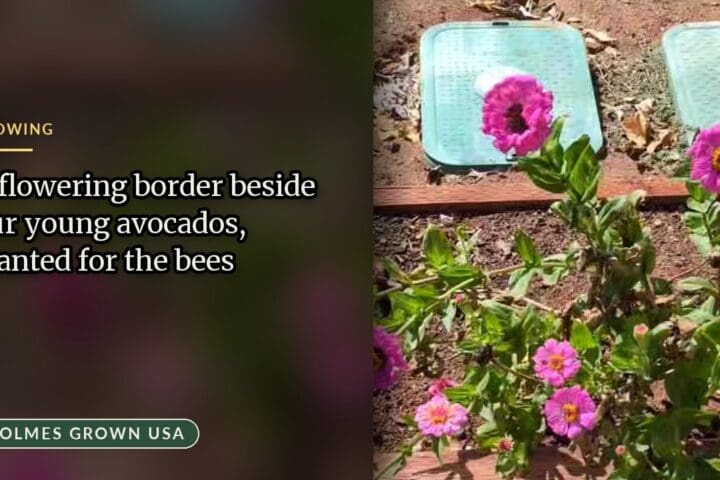
Pollinators matter too. The flowers are small and it is insects that carry the pollen, so anything that brings more of them into the yard helps. We have seen that firsthand with sunflowers planted near the trees. Incomplete pollination can also produce seedless little fruit called avocado cukes.
Reason two: not enough water and nutrients
The second common reason is simpler. A tree that is short on water or food will look after itself first, and fruit is the first thing it gives up. Avocado Production in California: A Cultural Handbook for Growers, Book Two, calls under-irrigation one of the leading causes of poor avocado yields in California, and warns that missing a series of irrigations for one to two weeks can set off fruit drop and ruin that year’s crop. Nitrogen is the nutrient most likely to run short if it is not applied regularly, but pale, small leaves can also come from root rot or waterlogged soil, so a leaf test is the way to tell them apart.
We have a neighbor with about three avocado trees that have not produced in years. He waters fairly regularly, but not as much as we do on our side of the property line. The Hass in this video, on our side, is completely loaded. Watering is one of the clearest differences between the two.
How much is enough depends on the size of the tree, your soil and the weather. Our guide to how much water an avocado tree needs is the place to start, and the avocado irrigation calculator will give you a run time for your own trees.
Other things to rule out
If your tree is young, it may simply not be old enough yet. Grafted trees usually start bearing around their third year after planting, while a tree grown from a seed can take up to ten years or more, and some seedlings never bear at all. Stressed roots can also stop a tree from fruiting even when it gets plenty of water.
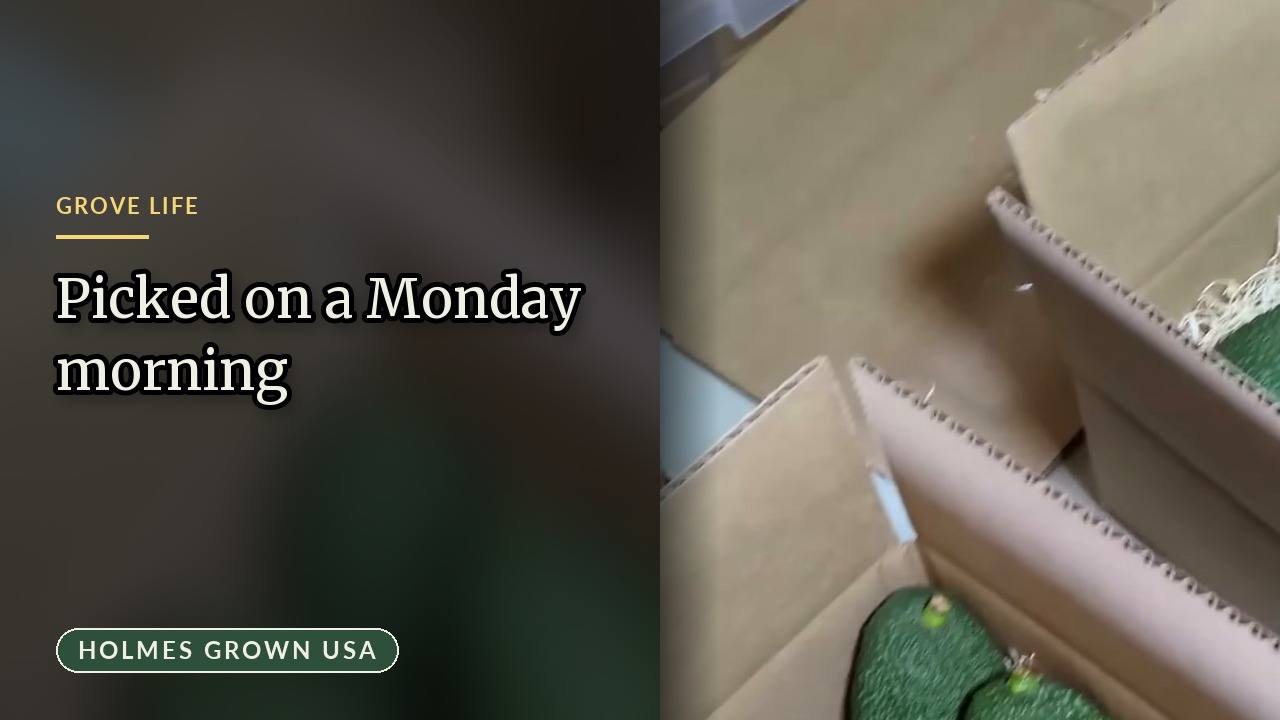
Have another avocado question? Leave it in the comments on the video. And while you wait for your own tree, our 4lb Hass box and 6lb Hass box ship free, picked the week they go out — with a waitlist on each page between harvests. Until the trees are picking again, the avocado scoop, the Hawaiian shirt and our hats ship year-round.
Try this: Check two things before anything else: whether another avocado tree flowers anywhere near yours, and whether the whole root zone is getting wet.
This post is part of our guide to growing avocado trees.