Hass Avocado Harvest Guide: Managing Late Season Fruit and Summer Heat
Hass avocados can hang on the tree well into summer, but heat is the biggest risk to that late fruit: long spells above 100°F make trees drop fruit, so the late-season job is steady watering, mulch, and picking before quality slips. Here is how we manage mature Hass trees through the hottest part of the harvest.
Understanding the Late-Season Hass Avocado Harvest
Managing mature Hass avocado trees during the late summer harvest requires a clear understanding of tree biology, temperature stress, and crop timing. As summer temperatures peak across Southern California groves, growers frequently notice fruit dropping while mature avocados still hang heavily on high canopy branches. The Hass avocado is exceptional in its ability to store fruit directly on the tree across an extended harvest window, providing exceptional flavor and high oil content long after early-season varieties have completed their production cycles.
When trees are allowed to grow tall and expansive, their large structural canopies generate microclimates that shade inner branches and retain vital ambient moisture. However, managing these tall legacy trees during hot summer spells presents distinct cultivation challenges that require careful attention to irrigation, nutrient management, and harvesting technique.
Navigating Summer Heat and Heat-Induced Fruit Drop
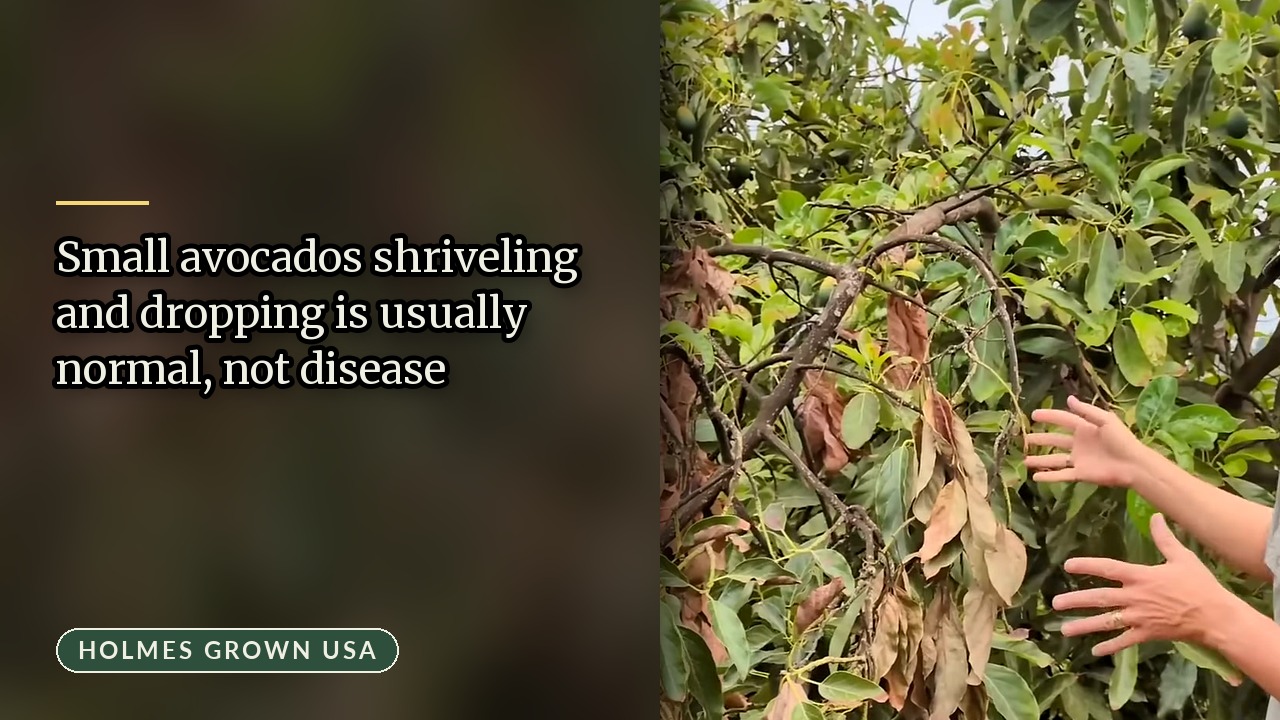
Extreme summer heat can impact avocado fruit retention, particularly when heat waves coincide with the final weeks of the current crop and the early growth of the upcoming season’s fruit. When elevated temperatures persist, avocado trees face severe evapotranspiration demand, and a tree that cannot keep up sheds part of its fruit load. Avocado Production in California: A Cultural Handbook for Growers, Book One, puts numbers on it: prolonged spells above 100°F cause fruit drop, and temperatures over 105°F in late May or June have been known to drop almost the entire crop of newly set fruit. Hot, dry Santa Ana winds on east-facing slopes can cause almost complete fruit drop, and Hass is rated as having low wind tolerance. Water stress alone can do it too: the handbook warns that missing a series of irrigations for one to two weeks may start fruit drop and ruin that year’s production.
Understanding this natural stress response helps orchard owners and backyard growers implement proactive measures to protect their crops during mid to late summer periods. Implementing targeted grove management strategies can significantly mitigate yield loss during unexpected temperature spikes.
- Water ahead of forecast heat so the root zone is moist going into it, without waterlogging it. “Deep” is the wrong target: 80 to 90 percent of an avocado’s feeder roots sit in the top 8 to 10 inches of soil. Schedules built on CIMIS evapotranspiration look back over the previous seven days, so after a sudden hot or windy spell the trees may need water again sooner than the schedule says. Avocado roots begin to die from lack of oxygen after about 48 hours of flooding.
- Maintain a thick layer of organic leaf mulch beneath the tree canopy to regulate soil temperature and conserve moisture. Mulched trees are easy to over-water, so let the soil, not the calendar, decide when to irrigate.
- Avoid heavy late-summer structural pruning that exposes previously shaded inner branches to direct sunburn and stress. The UC handbook’s rule is not to prune after the summer flush; spring is best, and bark newly exposed to the sun should be whitewashed.
- Monitor soil moisture levels using tensiometers or moisture probes to prevent dramatic wet-to-dry soil fluctuations. The handbook’s trigger is about 20 centibars on an 8-inch tensiometer in sandy hillside loam, or 40 to 45 centibars in valley loam, which is roughly when 30 percent of the available water is gone.
The Dual-Harvest Canopy Dynamic on Mature Hass Trees
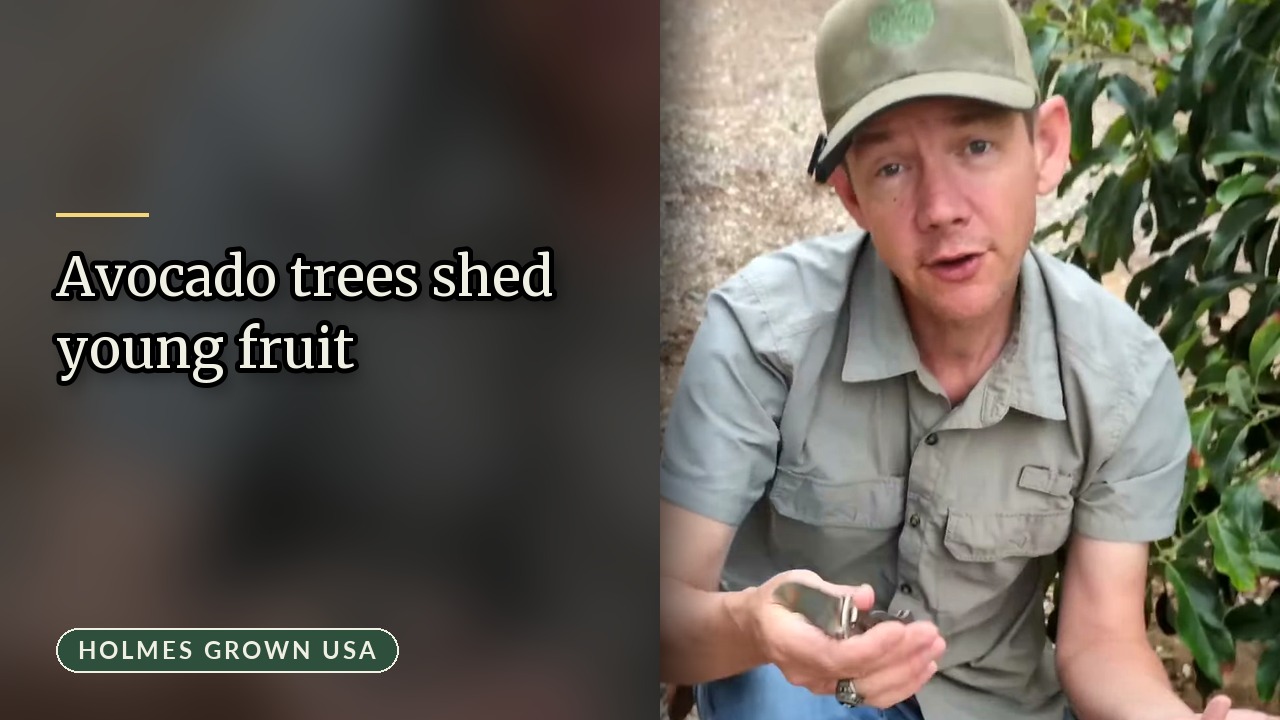
One of the most remarkable characteristics of the Hass avocado cultivar is the overlapping dual-crop phenomenon. On a healthy, mature Hass avocado tree, you will observe two distinct crop generations sharing the exact same branches simultaneously. Fully developed, mature avocados from the current season hang fully formed, while younger, smaller avocados set during this spring’s bloom are developing nearby for the following year’s harvest.
This overlapping cycle makes the late summer period crucial for grove managers. Every decision made during the late-season harvest directly impacts the health and volume of the emerging crop set for the following calendar year.
- Inspect fruit size, stem skin texture, and oil maturity before executing major harvest passes.
- Harvest mature fruit from the upper exposed canopy first to relieve structural weight stress on high limbs.
- Handle harvest equipment carefully to avoid knocking off fragile, young fruitlets set for the upcoming season.
- Provide balanced seasonal nutrients that support late-stage fruit maturation without forcing excess tender vegetative growth during heat peaks.
How Late Can You Leave Hass on the Tree?
Longer than almost any other avocado, but not forever. In San Diego County the Hass season generally runs from about January to August, and in the cooler Santa Barbara and San Luis Obispo areas it can run as late as June to October. Since Chilean fruit took over the winter market, California growers have concentrated most of their Hass picking between February and August.
The handbook is candid about the limits at each end. Early-season Hass is not as palatable as mid-season fruit, and late-season fruit often turns rancid rapidly once it softens. Holding fruit late also has a cost for the tree: the shoots that carry fruit do not flower the next spring, so a heavy crop left hanging means fewer flowers and a lighter crop the year after. The UC recommendation is to have at least a third of the Hass crop off the tree before April for a good return bloom.
Why a Hot Summer Can Cost Next Year’s Crop
Heat does damage beyond the fruit that hits the ground. Water stress does not make an avocado flower more. In California it usually means less bloom the following spring, because a stressed tree burns at the leaf tips, drops leaves and then puts its energy into a replacement flush of leaves instead of flowers. Salt adds to the problem: chloride from irrigation water builds up in the leaves over the season and shows as tip-burn in the fall, usually September or October. Leaf tissue dies once chloride passes about 0.25 percent, and tip-burn is not a sign the tree needs fertilizer. The burned leaves drop and are replaced by a flush in late winter, just when the tree should be flowering. The handbook’s answer is to leach with every irrigation; with district water, about 10 percent more water than the trees use is probably enough to push salt below the roots. Keeping trees evenly watered through late summer protects the bloom that sets next year’s crop, which is why we watch soil moisture closely through the hottest weeks.
Canopy Height vs. Orchard Accessibility
Allowing an avocado tree to grow wild and tall provides maximum natural shade and massive total bearing volume, but it also alters harvest dynamics. High canopy fruit receives abundant sunlight, resulting in rich oil concentration and excellent eating quality, though picking fruit at heights above twenty feet requires specialized tools or careful selective harvesting protocols. Left unpruned, a Hass tree can reach 50 to 60 feet. We use a pole picker for the top of the canopy, and we show how we pick avocados from the top of the tree.
For family farms and homesteaders, balancing natural tree growth with accessible picking height is an ongoing process. Legacy trees that have reached full size demonstrate the remarkable resilience of the Hass variety, serving as foundational producers in the grove year after year.
Sustaining Your Avocado Trees Through Seasonal Transitions
Whether managing a commercial grove or nurturing a single backyard fruit tree, recognizing how temperature, water balance, and crop overlap influence the Hass avocado allows you to optimize harvest timing and preserve tree health. By supporting your trees through the stresses of late summer, you ensure a bountiful crop for current picking and lay the groundwork for a robust harvest next year. Visit Holmes Grown USA for more growing guides, grove updates, and farm-fresh insights.
Late-season fruit has had the longest on the tree, and many people think it is the best of the year. Our 4lb Hass box and 6lb Hass box ship free, picked the week they go out; between harvests the waitlist on either page will tell you when picking starts. Until the trees are picking again, the avocado scoop, the Hawaiian shirt and our hats ship year-round.
Try this: Check your mulch depth before the first long spell above 100°F. It is the cheapest part of keeping late fruit on the tree.
This is part of our complete guide to growing avocado trees — time to fruit, height, roots, leaf health, pruning and picking, all in one place.