What Is an Avocado Cuke? Why Some Avocados Grow Completely Seedless
An avocado cuke is a small, narrow, seedless avocado that forms when a pollen tube starts the fruit growing but fertilization never finishes, usually because the weather during bloom was too cool for normal fruit set. Cukes are edible, taste like the variety they came from, and are sold as cocktail avocados.
Cut open a tiny, finger-sized avocado, find no pit at all, and you have met one of the stranger things a grove produces. It is called a cuke, and it is not a defect or a freak — it is a predictable consequence of how avocado flowers work.
What an avocado cuke actually is
A cuke is a seedless avocado that forms when a flower is pollinated but fertilisation is never completed. Commercially they are sold as cocktail avocados, and growers sometimes call them carls. The UC growers’ handbook describes them as fruit stimulated to grow by the pollen tube, where the fertilisation event never finished. Botanists call fruit that sets without a seed parthenocarpic.
The flower receives enough stimulation to start building fruit, but no embryo forms. With no seed to regulate the hormonal signals that control sizing, the fruit stays small, narrow and elongated, looking rather like a miniature cucumber. Hence the name.
Why it happens: flowering, weather and bees
Avocado flowering is genuinely strange. Trees have synchronous dichogamy: a flower opens female on one day, closes, then reopens male the next. Type A varieties like Hass open female in the morning of day one and male in the afternoon of day two; Type B varieties like Fuerte open female in the afternoon of day one and male the next morning. Planted together, one type is shedding pollen while the other is receptive. In cool weather the schedule slips, so a single tree can carry female and male flowers at the same time, which is how large blocks of one variety still set good crops.
Several things have to align for normal fertilisation:
- Temperature. The flowers keep their regular schedule only when the average of the night low and day high is above about 70°F. Below about 60°F there may be no fruit set at all, and cool, cloudy weather also keeps bees from working.
- Pollen viability. Cold nights can stall pollen tube growth before fertilisation completes.
- Overlap. Type A and Type B trees must be in complementary phases during bloom.
When cool, overcast or wet weather settles over the grove during heavy flowering, bees work less and the flowers’ timing goes irregular. Pollen may land and start a tube, but fertilisation does not complete. The fruit gets the signal to start growing without a seed behind it, and you get cukes.
Why Fuerte trees produce more of them
Cukes turn up routinely on Fuerte and only rarely on Hass. Fuerte is a Type B variety, opening female in the afternoon and male the following morning, and it is more exposed to the spring temperature swings that disrupt pollination. In one study at daytime highs of 64 to 70°F with cool nights, Fuerte flowers never opened in the female stage at all while Hass completed its cycle. The handbook calls Fuerte’s fruit set erratic, and it describes cukes specifically under Fuerte. On our grove they are a normal part of a Fuerte season. You can read more about the variety in our guide to Fuerte season.
When do cukes form?
Cukes are set during bloom, so the weather that matters is spring weather. Hass in San Diego County blooms mostly over about six weeks from late March to early May; Fuerte blooms earlier, roughly February to April, and some Fuerte groves flower from as early as October right through to July. A cold snap in the middle of that window can delay the male stage by a day or more, sometimes leaving two to four days between the female and male openings. The more of those cool spells land in peak bloom, the more cukes you tend to see.
You will not notice them straight away. A cuke looks like any other fruitlet at first; it is only as the crop sizes up over the following months that the narrow, cucumber-shaped fruit stand out from the rounder fruit around them.
Is a cuke the same as fruit drop?
No, although both come from the same numbers game. A mature avocado tree can open up to a million flowers in a season, and fewer than 0.1 percent of them hold on to become harvestable fruit. Most fruitlets that fail simply fall off; the handbook notes that heat over 105°F in late May or June has been known to drop almost the entire crop of newly set fruit. A cuke is different: it holds on and keeps growing, just without a seed. We looked at the early-summer fruit fall, and some myths about seedless fruit, in June drop in avocados.
What is inside one
Slice a cuke lengthwise and there are two things to notice. There is no pit — just a slight hollow, or a tiny vestigial speck where one would have anchored. And the flesh runs skin to skin, so nothing is wasted.
Cut from the same canopy as a full-sized fruit, a cuke has the same oil content, texture and flavour. The eating experience is identical, just smaller.
Can you eat them? Yes, and they are a delicacy
- Zero waste. Every bit of the interior is edible.
- Thin skin. On Fuerte and Mexican-race varieties the skin is often thin enough to eat without peeling.
- Pickling. High-end kitchens brine them whole as pickled avocados.
Why you never see them in shops
Three reasons, all of them about logistics rather than quality:
- Unpredictable yield. Cukes are a by-product of weather. No grower can decide to produce a crop of them without sacrificing total harvest weight.
- Sizing. Packing houses grade by standard count sizes. Cukes are light and irregular, so the lines cull them out.
- Scarcity. Chefs seek them, but supply is seasonal and small, which confines them to direct-from-farm sales.
What cukes tell you about your trees
A handful scattered across a tree is entirely normal and no cause for concern. A tree that consistently produces more cukes than standard fruit is telling you there is a pollination barrier in that spot.
If you want to improve pollination rates:
- Plant pollinizer companions — pair a Type A variety with a Type B. The handbook says Fuerte set often improves dramatically when interplanted with A-type trees, and cross-pollination works best when the A and B trees are one or two rows apart.
- Plant flowering borders or native plants that draw pollinators through the spring bloom, but keep weeds out from under the trees: weeds harbour persea mites, and the handbook notes that weeds and cover crops compete with the trees for water and nitrogen.
- Avoid broad-spectrum pesticides while flowers are open. They also kill the predatory mites and insects that keep persea mite and caterpillars in check.
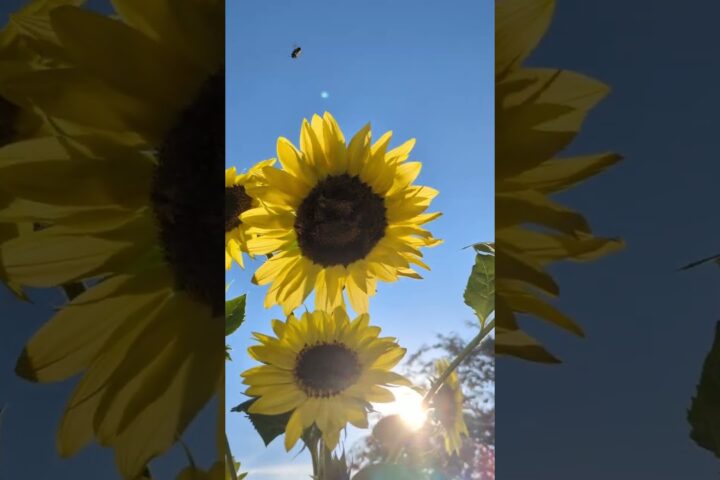
We wrote about doing exactly that in how planting sunflowers boosts pollination and fruit set.
Watching cuke rates across the acreage is genuinely useful feedback — on bee activity, on spring weather, and on the health of the grove.
This is part of our complete guide to growing avocado trees — time to fruit, height, roots, leaf health, pruning and picking, all in one place.